
ROSA vs TOSA: Understanding Fiber Optic Components
Advertisement
This article explains the basics of ROSA and TOSA, two important terms in the context of fiber optic networks.
ROSA - Receiver Optical Sub Assembly
ROSA stands for Receiver Optical Sub Assembly. Essentially, it’s a component used to receive optical signals in a fiber optic system.
The core of a ROSA is a photodiode. This photodiode does the crucial job of converting the incoming light signal into an electrical signal. The ROSA assembly also includes electrical connection points, giving users access to the resulting electrical signal. For more details, you can refer to information about Photodiodes.
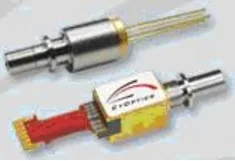
Here’s a visual representation of a ROSA and TOSA assembly:
TOSA - Transmission Optical Sub Assembly
TOSA stands for Transmission Optical Sub Assembly. As the name suggests, this component is used to transmit optical signals within a fiber optic network.
The TOSA uses either a laser diode or an LED to convert electrical signals into light. The TOSA assembly incorporates both optical and electrical connection points. These connections allow users to apply electrical signals to control the laser or LED. They also direct the light emitted from the laser or LED onto the optical fiber system. You can find additional information in resources about LEDs and Lasers.
Continue Learning Fiber Optic Fundamentals & Tutorials
- Understanding Optical Fiber Communication
- Understanding Plastic Optical Fiber
- Fiber Optic Sensors: Types, Working Principles & Applications
- RF Over Fiber: Advantages, Disadvantages & Key Differences
- THz to Optical Conversion in 6G Wireless
- Quantum Key Distribution Over Fiber
- Optical Circuit Switching vs Burst Switching vs Packet Switching
Technology Comparisons (Fiber vs. Others)
- Fiber vs Microwave
- Copper vs Fiber Optic Cable Comparison
- Glass Optical Fiber vs Plastic Optical Fiber (GOF vs POF)
- Active vs Passive Optical Networks (AON vs PON)
- 5G vs Fiber Optic
Explore More Optical Networking Components
- Optical Switching Basics
- Optical Transceiver Explained
- Optical Add-Drop Multiplexer (OADM) Explained
- What is a ROADM (Reconfigurable Optical Add-Drop Mux)?
- Optical Fiber Connectors (FC, SC, ST, LC, DIN)
- Optical Amplifiers & Repeaters
- Optical Wavelength Converters
- Optical Filter Basics
- Optical Equalizer Basics
- Optical Transimpedance Amplifier
- Optical Sensors: Advantages & Disadvantages
- Optical Biosensors: Working, Types & Applications