
What is ROADM: Reconfigurable Optical Add Drop Multiplexer
Advertisement
A ROADM (Reconfigurable Optical Add Drop Multiplexer) is an optical networking device that dynamically adds, drops or routes wavelength channels without converting signals into electrical form. ROADMs improve flexibility, scalability and bandwidth utilization in DWDM networks, enabling efficient management of modern high capacity optical communication systems. OADM is used to combine, or multiplex, optical signals of different wavelengths. It’s often referred to by its short form, OADM.
The same device can also be used to remove, or separate, a specific optical signal from the incoming multiplexed optical signal. For more information on basic OADMs, you can check out a dedicated resource on Optical ADMs.
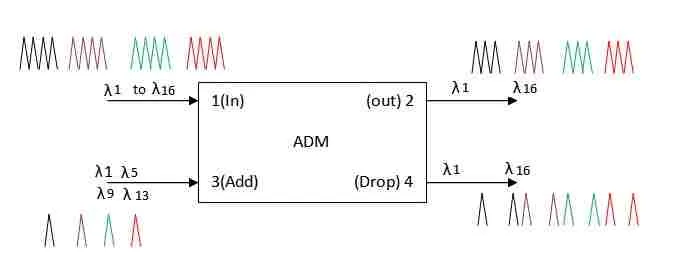
The acronym ROADM stands for Reconfigurable Optical Add Drop MUX.
Think of it as a more flexible version of the fixed OADM we just mentioned. A ROADM allows network operators to remotely change the wavelength of the input and output optical signals at a particular optical switch or node.
Here are some key advantages of using ROADMs:
- Remote Wavelength Configuration: The wavelength can be changed remotely, without needing physical intervention.
- Reduced Maintenance Time: This remote configurability significantly reduces the time required for network maintenance and reconfiguration.
- Lower Labor Costs: Fewer truck rolls and on-site visits translate directly into lower labor costs.
- Minimal Equipment Changes: ROADMs minimize the need for physical optical equipment changes when reconfiguring the optical network.
Continue Learning Multiplexers (Mux & Demux)
- Mux vs Demux
- Concentrator vs Multiplexer
- AWG (Arrayed Waveguide Grating) Optical Mux/Demux
- Optical Add-Drop Multiplexer (OADM) Explained
- Transponder vs Muxponder