
Optical Switching Basics: Types and Technologies
Advertisement
Optical switching is the process of controlling the destination of individual optical information signals. This technology allows for high bit rate transmission to be switched between various optical lines.
The core component enabling optical switching is the Optical Switch.
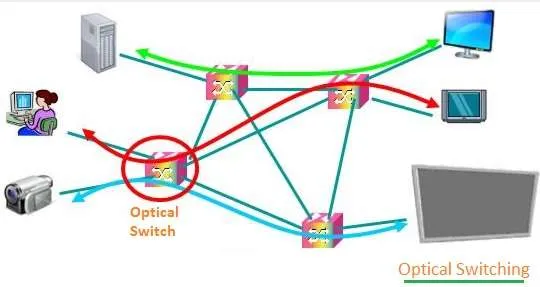 Figure: Optical Switch
Switch control can be achieved through:
- Purely electronic methods
- Purely optical methods
- A hybrid approach combining both optical and electronic techniques
Figure 1 illustrates a typical diagram of optical switching.
Optical Switching Types
There are several types of optical switching, each with its own advantages and applications:
- Space Division Switching
- Wavelength Division Switching
- Time Division Switching
- Hybrid Switching (combining Space, Wavelength, and Time)
Optical Space Division Switching
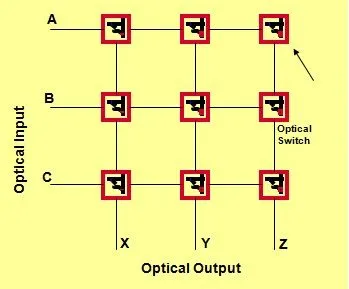 Figure 2: Optical Space Division Switching
Optical Space Division Switching is a straightforward form of optical switching based on a matrix configuration. The figure above illustrates a 3x3 Space Division Switching setup. Key features include:
- Switching speeds of less than 1 nanosecond
- Support for very high bandwidth
- Low insertion loss
- Transparency to bit rate
Optical Wavelength Division Switching
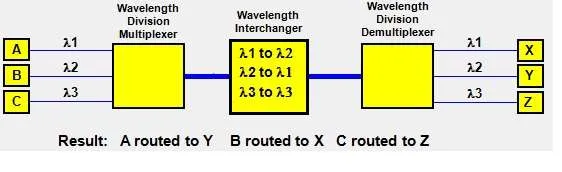 Figure 3: Optical Wavelength Division Switching
Optical Wavelength Division Switching connects optical lines based on programming at the wavelength interchanger. As shown in Figure 3, a channel can be routed to the Y channel, the B channel to the X channel, and the C channel to the Z channel.
The wavelength interchanger is critical in this type of switching, making it very suitable for DWDM (Dense Wavelength Division Multiplexing) based networks.
Optical Time Division Switching
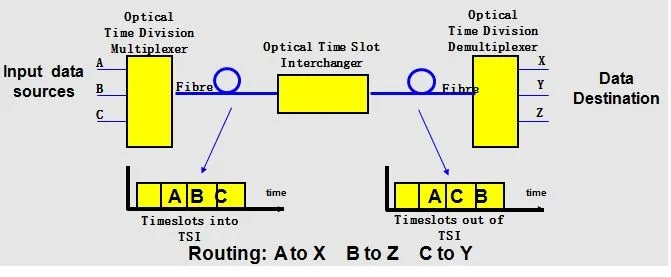 Figure 4: Optical Time Division Switching
Optical Time Division Switching, as depicted in Figure 4, is used in OTDM (Optical Time Division Multiplexing) environments.
The Optical Time Slot Interchanger (TSI) plays a critical role in this type of switching. The TSI rearranges the physical channel positions within the OTDM frame, simplifying routing.
Optical Hybrid Switching
 Figure 5: Optical Hybrid Switching
Optical Hybrid Switching combines the features of the previously mentioned switching types: time, wavelength, and space.
Continue Learning Fiber Optic Fundamentals & Tutorials
- Understanding Optical Fiber Communication
- Understanding Plastic Optical Fiber
- Fiber Optic Sensors: Types, Working Principles & Applications
- RF Over Fiber: Advantages, Disadvantages & Key Differences
- THz to Optical Conversion in 6G Wireless
- Quantum Key Distribution Over Fiber
- Optical Circuit Switching vs Burst Switching vs Packet Switching
Technology Comparisons (Fiber vs. Others)
- Fiber vs Microwave
- Copper vs Fiber Optic Cable Comparison
- Glass Optical Fiber vs Plastic Optical Fiber (GOF vs POF)
- Active vs Passive Optical Networks (AON vs PON)
- 5G vs Fiber Optic
Explore More Optical Networking Components
- Optical Switching Basics
- Optical Transceiver Explained
- Optical Add-Drop Multiplexer (OADM) Explained
- What is a ROADM (Reconfigurable Optical Add-Drop Mux)?
- Optical Fiber Connectors (FC, SC, ST, LC, DIN)
- Optical Amplifiers & Repeaters
- Optical Wavelength Converters
- Optical Filter Basics
- Optical Equalizer Basics
- Optical Transimpedance Amplifier
- Optical Sensors: Advantages & Disadvantages
- Optical Biosensors: Working, Types & Applications