
6G PA Linearization : Memory Polynomials vs AI
Discover how AI-based neural networks are replacing traditional memory polynomials for Power Amplifier (PA) linearization and DPD in 6G wireless networks.
Advertisement
Explore articles, explainers, and practical references focused on 6g within Terminology.
Articles
19
Showing
1-19
Pages
1/1
More in Terminology
Jump across related topic clusters without losing your place.
Advertisement
Article Index
Showing 1-19 of 19 articles in this archive.
Discover how AI-based neural networks are replacing traditional memory polynomials for Power Amplifier (PA) linearization and DPD in 6G wireless networks.
Discover the main advantages and disadvantages of plasmonic antennas. Learn how they enhance light-matter interaction, speed and efficiency in modern communication such as 6G wireless.
Discover the role of AI and ML in 6G — key features, benefits, and challenges driving intelligent, adaptive and autonomous wireless systems.
Explore how autoencoders revolutionize 6G through end to end learning, signal optimization, intelligent communication system design with the help of AI/ML and deep learning.
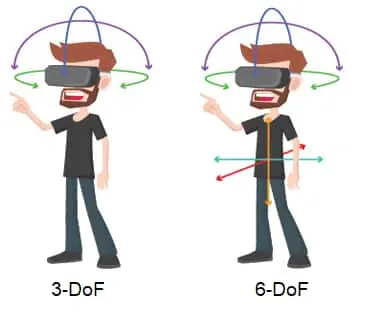
Compare 3-DoF (Degrees of Freedom) Vs 6-DoF and explore difference between 3DoF and 6DoF terms used in AR/VR/XR.
Compare traditional cellular networks with emerging cell free architectures. Learn differences between them including how cell free systems improve coverage, capacity and reliability in 5G and 6G.
Compare FR1, FR2, and FR3 spectrums. Learn why the FR3 centimeter-wave band is the "Goldilocks" spectrum for next-generation 6G wireless networks.
Understand Full Duplex in 6G — features, benefits and challenges that enable simultaneous transmission and reception for higher efficiency.
Compare true Full Duplex with Sub Band Full Duplex (SBFD) for 6G. Learn how these architectures improve spectral efficiency and enable ISAC applications.
Explore advantages and disadvantages of JCAS in 6G networks including its key features, benefits and limitations driving intelligent communication and sensing integration.
Compare massive mimo vs ultra massive MIMO and explore how they differ in antenna design, spectral efficiency and energy performance for 5G and 6G communication systems.
Explore the key differences between OTFS and OFDM used in 5G and 6G technologies as multi-carrier waveforms.
Explore Photonics and Visible Light Communication (VLC) in 6G — key features, benefits and limitations shaping next-gen wireless systems.
Understand the key differences between Reconfigurable Intelligent Surfaces (RIS) and Massive MIMO in 6G, comparing power, cost, and signal steering.
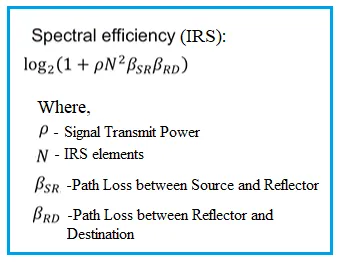
Explore the key differences between Reconfigurable Intelligent Surfaces (RIS) and Relays in wireless communication, including operating mechanisms, energy consumption, and spectral efficiency.
Compare standard wireless communication with RIS technology. Discover differences between them including how intelligent surfaces enable smart signal reflection, higher energy efficiency and 6G innovation.
Learn about Ultra Massive MIMO (UM-MIMO) in 6G — its benefits, challenges, and how it enhances data rates, efficiency, and coverage.
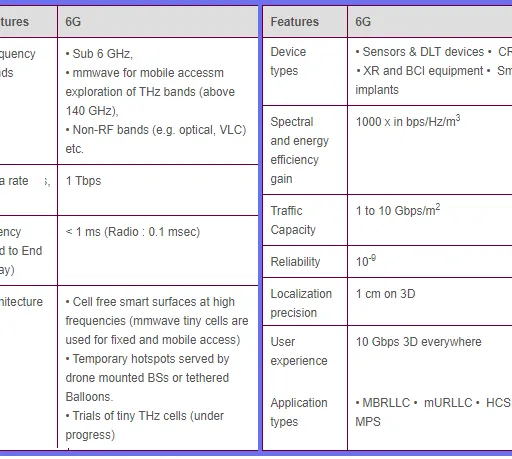
Explore 5 key advantages and disadvantages of 6G wireless technology, including benefits like increased connection density, revolutionizing healthcare, and THz frequency and challenges like VLC, THz and energy consumption.
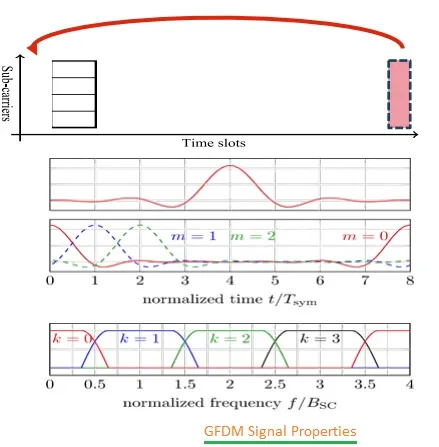
Explore OTFS multi-carrier waveform used in 6G and understand its advantages and disadvantages.
Advertisement