
What is Optical Sensor : Advantages and Disadvantages
Advertisement
An optical sensor is an electronic device that detects light or changes in light intensity and converts them into electrical signals for measurement or control. Used in industrial automation, medical equipment, consumer electronics, and automotive systems, optical sensors provide fast, accurate, and non-contact sensing but can be affected by environmental conditions.
Optical Sensor Working Operation
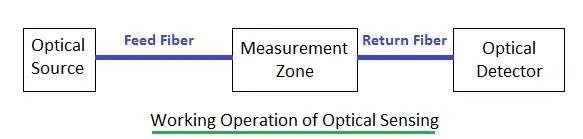 Fig 1: Optical sensing using optical sensor
In general, optical sensing involves two key components: a transmitter (the optical source) and a receiver (the optical detector). The diagram above illustrates this concept with an optical fiber example. As depicted, the light beam’s characteristics change when an object interferes between the transmitter and receiver.
Optical sensing measures five key parameters of light:
- Intensity
- Phase
- Wavelength
- Polarization
- Spectral Distribution
Benefits or Advantages of Optical Sensors
- High Sensitivity: Optical sensors are very sensitive to changes in light.
- Chemically Inert: They are not easily affected by chemical reactions, making them durable in various environments.
- Small and Lightweight: Their compact size and light weight make them suitable for applications where space and weight are constraints.
- Suitable for Remote Sensing: They can be used to measure objects from a distance.
- Immunity to Electromagnetic Interference: Optical sensors are not easily affected by electromagnetic noise, providing reliable readings.
- Wide Dynamic Range: They can measure a wide range of light intensities.
- Capable of monitoring a wide range of chemical and physical parameters
- Reliable Operation
Limitations or Disadvantages of Optical Sensors
- Susceptible to Interference from Environmental Effects: Factors like dust, fog, and other ambient light sources can affect their accuracy.
- Can be Costly: Some optical sensors can be more expensive than other types of sensors.
- Susceptible to Physical Damage: They can be fragile and prone to damage from impacts or harsh conditions.
Summary
An optical sensor detects light and converts optical signals into electrical outputs for sensing and measurement applications. It provides high accuracy, fast response, and non-contact operation. However, performance may be affected by dust, ambient light, alignment issues, and environmental contamination.
Continue Learning Fiber Optic Fundamentals & Tutorials
- Understanding Optical Fiber Communication
- Understanding Plastic Optical Fiber
- Fiber Optic Sensors: Types, Working Principles & Applications
- RF Over Fiber: Advantages, Disadvantages & Key Differences
- THz to Optical Conversion in 6G Wireless
- Quantum Key Distribution Over Fiber
- Optical Circuit Switching vs Burst Switching vs Packet Switching
Technology Comparisons (Fiber vs. Others)
- Fiber vs Microwave
- Copper vs Fiber Optic Cable Comparison
- Glass Optical Fiber vs Plastic Optical Fiber (GOF vs POF)
- Active vs Passive Optical Networks (AON vs PON)
- 5G vs Fiber Optic
Explore More Optical Networking Components
- Optical Switching Basics
- Optical Transceiver Explained
- Optical Add-Drop Multiplexer (OADM) Explained
- What is a ROADM (Reconfigurable Optical Add-Drop Mux)?
- Optical Fiber Connectors (FC, SC, ST, LC, DIN)
- Optical Amplifiers & Repeaters
- Optical Wavelength Converters
- Optical Filter Basics
- Optical Equalizer Basics
- Optical Transimpedance Amplifier
- Optical Sensors: Advantages & Disadvantages
- Optical Biosensors: Working, Types & Applications