
Active vs. Passive Radar: Key Differences Explained
Explore the differences between active and passive radar systems, including their principles, advantages, disadvantages, and applications in various fields.
Advertisement
Explore articles, explainers, and practical references focused on Radar Terms within Terminology.
Articles
38
Showing
1-25
Pages
1/2
More in Terminology
Jump across related topic clusters without losing your place.
Advertisement
Article Index
Showing 1-25 of 38 articles in this archive.
Explore the differences between active and passive radar systems, including their principles, advantages, disadvantages, and applications in various fields.
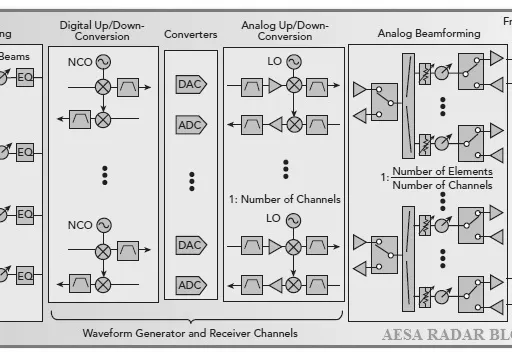
Explore AESA radar technology: block diagram, working principles, and advantages of Active Electronically Scanned Array radar systems.
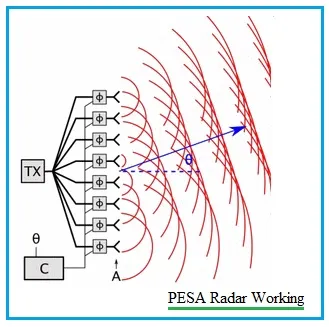
Explore the key distinctions between AESA (Active Electronically Scanned Array) and PESA (Passive Electronically Scanned Array) radar technologies, including features, advantages, and similarities.
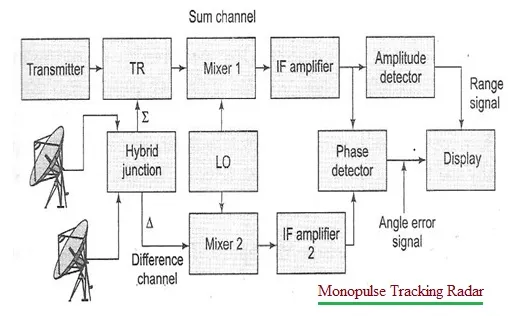
Explore the differences between Angle Tracking Radar and Monopulse Tracking Radar, focusing on their methods for determining target location and trajectory.
Understand the differences between ARSR and ASR radars used in air traffic control for airport vicinity and air routes.
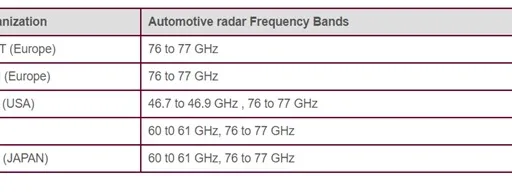
Overview of frequency bands used in automotive radar systems worldwide. Includes a table of band allocations and links to radar tutorials.
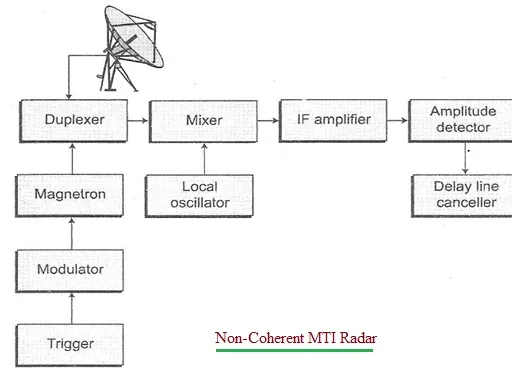
Explore the distinctions between coherent and non-coherent MTI radar systems. Learn how they detect moving targets and their applications.
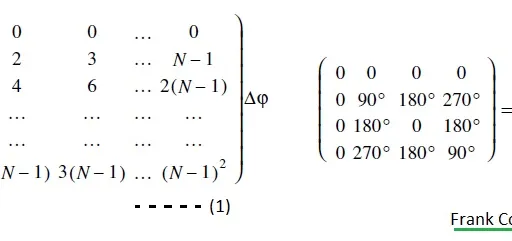
Comparison of Costas, Barker, and Frank codes as digital pulse compression techniques used in radar systems. Learn their advantages and disadvantages.
Comparison of fanned beam, sector beam, and cosecant square beam antennas used in radar systems, highlighting their applications.
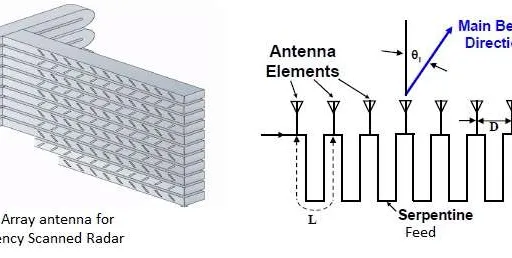
Explore the workings of frequency scanned radar, its advantages, and disadvantages. Learn about its operation, scanning techniques, and limitations.
Explore the key differences between pulse and FMCW radars used in missile seeker systems, focusing on performance specifications and applications at 35GHz and 94GHz.
Explore the similarities and differences between Monopulse and Conical Scan Radar systems. Learn about their scanning systems, accuracy, and applications.
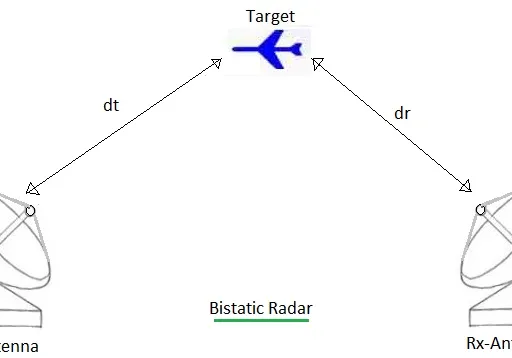
Explore the fundamental differences between monostatic and bistatic radar systems, including block diagrams and performance equations.
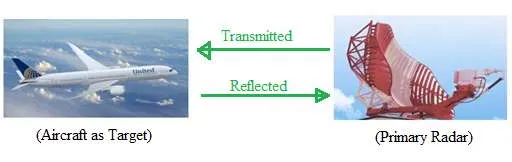
Explore the fundamental differences between primary (PSR) and secondary (SSR) radar systems, their operational principles, and applications in air traffic control and military contexts.
Explore the various radar frequency bands (HF, VHF, UHF, L, S, C, X, Ku, K, Ka) and their specific applications in surveillance, tracking, and mapping.
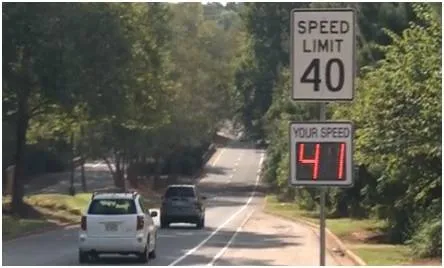
Explore how radar speed signs use radio waves and the Doppler effect to detect vehicle speeds and enhance road safety.
Explore radar target simulators: devices mimicking radar signatures for testing, calibration, and training. Learn about their functions, features, applications, and advantages.
Learn essential radar terminology, including frequency, phase, bandwidth, pulse width, PRF, PRT, duty factor, beam width, and radar reflectivity.
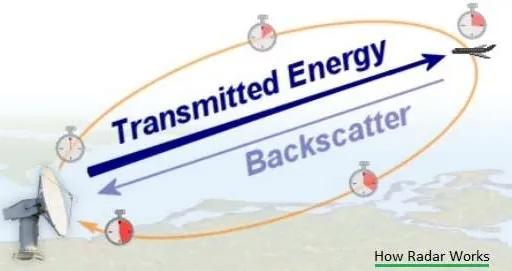
Explore the differences between search radar and tracking radar systems, their unique characteristics, and applications. Understand radar fundamentals.
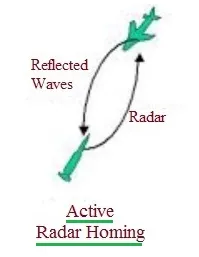
Explore the differences between semi-active, passive, and active radar homing missile systems, including their features and examples.
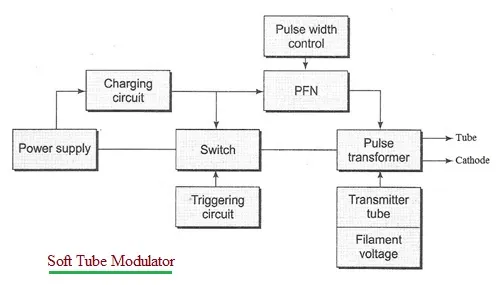
Comparison of soft and hard tube modulators, covering their components, operation, and features. Learn about PFN, switching mechanisms, and pulse control.
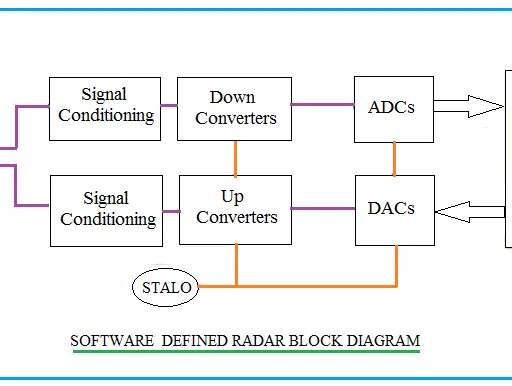
Learn the fundamentals of Software Defined Radar (SDR), including its architecture, key components, and advantages for rapid prototyping and wideband signal analysis.
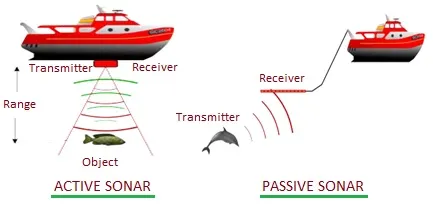
Difference between SONAR and RADAR-This page compares SONAR vs RADAR and describes SONAR and RADAR difference.SONAR stands for SOund Navigation And Ranging and RADAR stands for RAdio Detection And Ranging.
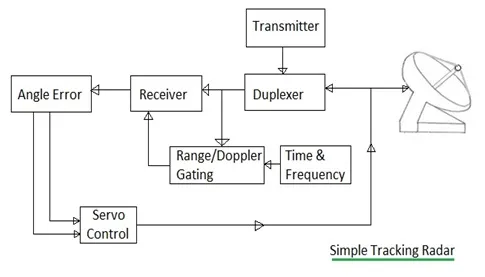
Explore the fundamentals of tracking radar, including its operational principles and various types like STT, TWS, and monopulse radar.
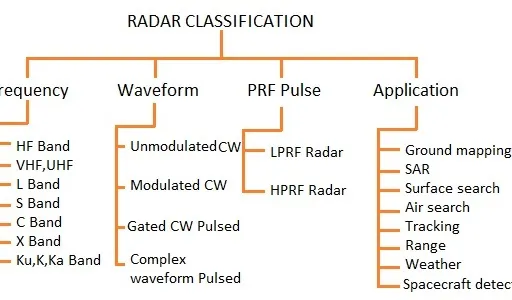
Explore the different types of radar systems, classified by frequency, waveform, PRF, and application. Describe 5-10 examples of radar types.
Advertisement