
AON vs PON: Active vs Passive Optical Networks Explained
Advertisement
This article breaks down the differences between AON (Active Optical Network) and PON (Passive Optical Network) types.
PON (Passive Optical Network)
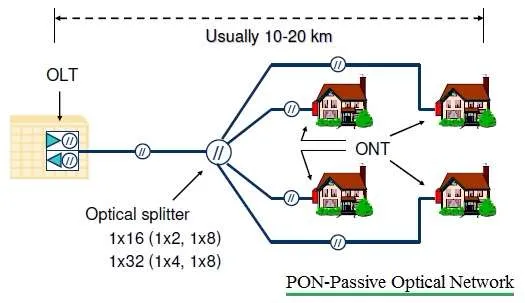 Figure-1 depicts typical set up used for deployment of PON ( Passive Optical Network ).
As shown, the OLT (Optical Line Termination) unit provides an Ethernet interface to the optical core network and a PON interface to the subscriber. A power splitter, located near the subscriber’s premises, provides individual connections to each user. These power splitters come in various sizes such as 1 x 2, 1 x 8, 1 x 16, and 1 x 32.
AON (Active Optical Network)
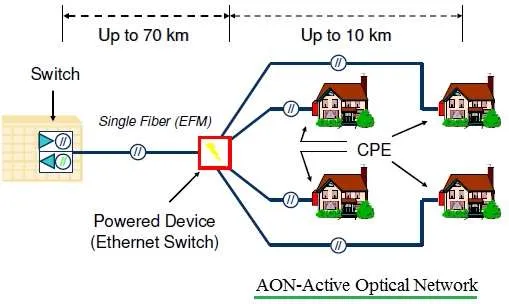 Figure-2 depicts typical set up used for deployment of AON ( Active Optical Network ).
Here, an Ethernet switch provides connections to individual subscribers within the network.
Comparison Between AON and PON
Here’s a breakdown of the key differences between AON and PON:
- Bandwidth Allocation: In PON, bandwidth allocation per subscriber is estimated based on the splitting factor. In AON, the allocation depends on the interface type and is adjustable. AON has an advantage over PON in terms of bandwidth allocation flexibility.
- Fault Impact: The impact of faults in the access node is lower in AON compared to PON.
- Subscriber Line Reliability (Customer-AN-Passive Splitter): Reliability is better in AON compared to PON in the segment between the customer, access node, and passive splitter.
- Subscriber Line Reliability (Passive Splitter-OLT / AN-Edge Switch): Conversely, reliability is better in PON (between the passive splitter and OLT) compared to AON (between the AN and Edge Switch).
- Cost: The costs of passive components used in PON are lower compared to the costs of active components used in AON. PON has a cost advantage.
Continue Learning Fiber Optic Fundamentals & Tutorials
- Understanding Optical Fiber Communication
- Understanding Plastic Optical Fiber
- Fiber Optic Sensors: Types, Working Principles & Applications
- RF Over Fiber: Advantages, Disadvantages & Key Differences
- THz to Optical Conversion in 6G Wireless
- Quantum Key Distribution Over Fiber
- Optical Circuit Switching vs Burst Switching vs Packet Switching
Technology Comparisons (Fiber vs. Others)
- Fiber vs Microwave
- Copper vs Fiber Optic Cable Comparison
- Glass Optical Fiber vs Plastic Optical Fiber (GOF vs POF)
- Active vs Passive Optical Networks (AON vs PON)
- 5G vs Fiber Optic
Explore More Optical Networking Components
- Optical Switching Basics
- Optical Transceiver Explained
- Optical Add-Drop Multiplexer (OADM) Explained
- What is a ROADM (Reconfigurable Optical Add-Drop Mux)?
- Optical Fiber Connectors (FC, SC, ST, LC, DIN)
- Optical Amplifiers & Repeaters
- Optical Wavelength Converters
- Optical Filter Basics
- Optical Equalizer Basics
- Optical Transimpedance Amplifier
- Optical Sensors: Advantages & Disadvantages
- Optical Biosensors: Working, Types & Applications