
Transmissive vs. Retro-Reflective Optical Sensors: Key Differences
By RF Wireless Expert Team
Advertisement
This article compares transmissive optical sensors and retro-reflective optical sensors, highlighting the differences between the two.
What is an Optical Sensor?
Introduction:
- Optical sensing refers to the method of detecting light rays.
- An optical sensor is a device that converts light rays into an electrical signal, similar to a photoresistor.
- Typically, an optical sensing system includes a transmitter (e.g., an LED as a light source) and a receiver (e.g., a photodiode or phototransistor as an optical detector).
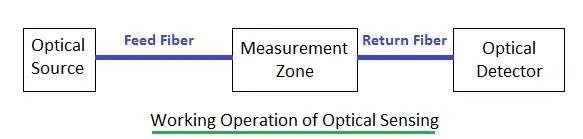
- Optical sensors are categorized into transmissive and reflective (or retro-reflective) types.
Transmissive Optical Sensor
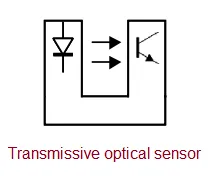
- The figure above illustrates a transmissive optical sensor.
- It consists of a pair of components: a light emitter and a light receiver. These components are positioned facing each other across a small gap, all within a single module.
- The sensor is activated when an object either interrupts or reflects the light beam.
- It’s also known as a “through-beam sensor.”
Popular Transmissive Optical Sensors:
- Vishay TCZT8020: Incorporates an infrared LED as the light source and a phototransistor as the detector.
- Omron EE-SX
Retro-Reflective Optical Sensor
-
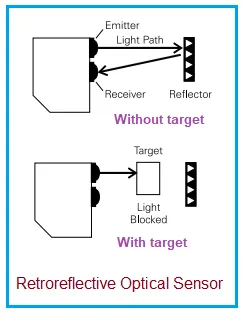
The image depicts a retro-reflective optical sensor.
-
It comprises a light emitter and a light detector placed adjacent to each other, facing in the same general direction.
-
When both the transmitting and receiving components are housed within a single module, it’s referred to as a retro-reflective sensor. It can be triggered in one of two ways:
-
- An object passing in front of the light beam reflects the light back to the detector. This requires the object to be naturally reflective or have a reflective patch applied.
-
- A stationary reflector can be mounted opposite the light emitter. In this scenario, a detector positioned beside the light emitter is triggered when an object interrupts the reflected light beam.
-
Popular Retro-Reflective Optical Sensors:
- Rodan RT-530
- Optek OPB606A
- Vishay TCRT5000
Continue Learning Fiber Optic Fundamentals & Tutorials
- Understanding Optical Fiber Communication
- Understanding Plastic Optical Fiber
- Fiber Optic Sensors: Types, Working Principles & Applications
- RF Over Fiber: Advantages, Disadvantages & Key Differences
- THz to Optical Conversion in 6G Wireless
- Quantum Key Distribution Over Fiber
- Optical Circuit Switching vs Burst Switching vs Packet Switching
Technology Comparisons (Fiber vs. Others)
- Fiber vs Microwave
- Copper vs Fiber Optic Cable Comparison
- Glass Optical Fiber vs Plastic Optical Fiber (GOF vs POF)
- Active vs Passive Optical Networks (AON vs PON)
- 5G vs Fiber Optic
Explore More Optical Networking Components
- Optical Switching Basics
- Optical Transceiver Explained
- Optical Add-Drop Multiplexer (OADM) Explained
- What is a ROADM (Reconfigurable Optical Add-Drop Mux)?
- Optical Fiber Connectors (FC, SC, ST, LC, DIN)
- Optical Amplifiers & Repeaters
- Optical Wavelength Converters
- Optical Filter Basics
- Optical Equalizer Basics
- Optical Transimpedance Amplifier
- Optical Sensors: Advantages & Disadvantages
- Optical Biosensors: Working, Types & Applications