
Angle Tracking Radar vs. Monopulse Tracking Radar: Key Differences
Advertisement
This article compares Angle Tracking Radar and Monopulse Tracking Radar, highlighting the key differences between them. A tracking radar’s purpose is to detect a target, determine its location, and predict its future trajectory.
Angle Tracking Radar
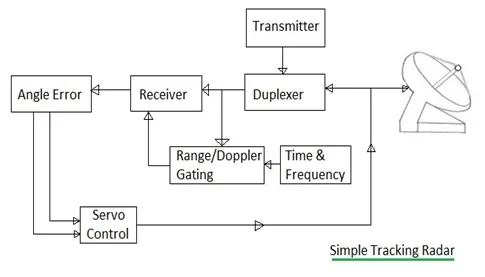
Figure 1 illustrates a typical Angle Tracking Radar block diagram.
The tracking operation heavily relies on angular information. The radar utilizes a narrow antenna beam to track a single target at a time. This precision is achieved using range gating and Doppler filtering. The angle error signal is fed into a servo control system, which in turn steers the antenna to maintain target lock.
Angle tracking employs pencil beams emitted from the radar. Two squinted beams, positioned at +/- θs from the boresight direction, are used for either simultaneous scans at different angles or for rapidly scanning a single beam between two angular positions. The intersection of these beams defines the boresight direction.
In an Angle Tracking Radar, the boresight is continuously aligned with the target’s direction.
Monopulse Tracking Radar
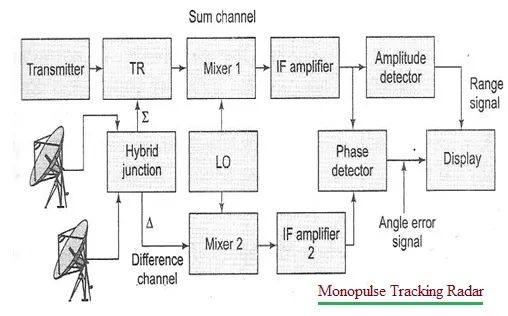
Figure 2 depicts a block diagram of a Monopulse Tracking Radar.
This type of radar obtains angle error information from a single pulse, a technique known as simultaneous lobing. The angular position of the target is determined by comparing received signals from two or more simultaneous lobes. This approach enables high-precision angle measurements.
Monopulse radars are commonly used in tracking applications to derive the angle error signal. This is achieved in two orthogonal coordinates. The tracking antenna maintains its boresight position pointed at the moving target.
Monopulse angle measurement is achieved through two primary methods:
- Amplitude comparison monopulse method
- Phase comparison monopulse method
Compare Radar With Other Technologies
- Radar Vs. LiDAR : Key Differences
- Radar Vs. SONAR : Key Differences
- Radar Vs. PIR Motion Sensors
- Radar Sensing Vs. Wi-Fi Sensing
- UWB Vs. PIR Vs. mmWave Radar: Key differences
Explore More Radar Types & their working
| AESA Radar Working & Benefits | AESA Vs. PESA Radar | ARSR and ASR Airport Surveillance Radar | Automotive Radar | Coherent Vs. Non-Coherent MTI Radar | CW Radar | Doppler Radar | FMCW Radar | Frequency Scanned Radar | Ground Penetrating Radar | HFSWR Radar for aircraft detection | Millimeter Wave Radar | Missile Seeker Radar | Monopulse & Conical Scan Radar | Monostatic & Bistatic Radar | MTI Radar | Over The Horizon Radar | Pulsed Radar | Search & Tracking Radar | Surveillance Radar | TWS Radar | UWB Radar | Weather Radar | X-Band Radar |
Continue Learning Radar Technology
- Radar Tutorial: Types and Applications
- Radar Architecture Components & Functions
- Radar Duplexers: Types and Functionality
- Radar Classifications or Types
- Radar : Key Advantages & Disadvantages
- Radar Frequency Bands Chart
- Radar - Transmitter & Receiver Measurements
- Active Radar Vs. Passive Radar : Key Differences
- Radar Terminologies