
CoAP vs. HTTP: A Comparative Analysis
Advertisement
This article compares CoAP (Constrained Application Protocol) and HTTP (Hyper Text Transfer Protocol), highlighting the key differences between these two protocols. We’ll explore their design philosophies, use cases, and technical implementations.
What is CoAP?
CoAP stands for Constrained Application Protocol. It’s essentially an upgraded version of HTTP, specifically designed for resource-constrained applications like IoT, WSN (Wireless Sensor Networks), and M2M (Machine-to-Machine) communication.
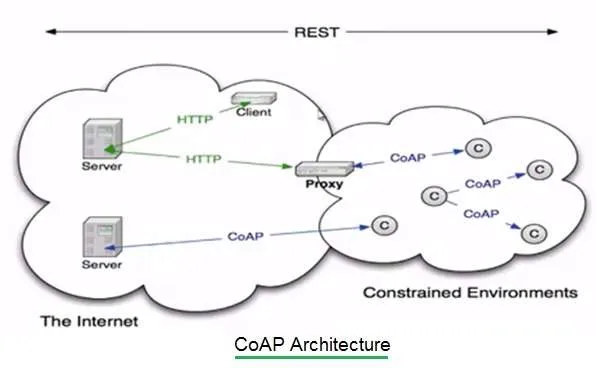
CoAP Architecture
Key characteristics of CoAP:
- UDP-based: CoAP relies on UDP (User Datagram Protocol) for transport.
- Reliable: It utilizes ACK (acknowledgment) messages to achieve reliability similar to TCP.
- Low Latency and Power Consumption: CoAP is engineered for minimal overhead, resulting in low latency and reduced power consumption compared to HTTP.
What is HTTP?
HTTP stands for Hyper Text Transfer Protocol. It’s the foundation of data communication on the World Wide Web.
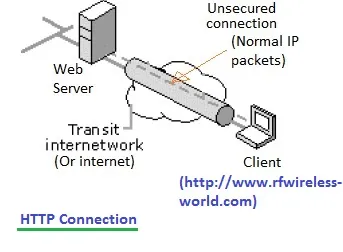
HTTP connection
As illustrated above, HTTP facilitates communication between clients and servers in an unsecured manner. HTTPS (HTTP Secure) is the secure version, adding encryption for enhanced security.
Key characteristics of HTTP:
- Web-centric: Primarily used for viewing web pages and accessing websites.
- Internet-focused: Designed for internet-based applications and devices where resource constraints aren’t a primary concern.
- TCP-based: HTTP uses TCP (Transmission Control Protocol) for reliable transport.
CoAP vs. HTTP: A Detailed Comparison
The following table summarizes the key differences between CoAP and HTTP:
| Feature | CoAP | HTTP |
|---|---|---|
| Protocol | UDP | TCP |
| Network Layer | IPv6 with 6LoWPAN | IP layer |
| Multicast Support | Supported | Not supported |
| Architecture Model | Client-Server & Publish-Subscribe | Client-Server |
| Synchronous Communication | Not needed | Required |
| Overhead | Low overhead, simple | More overhead compared to CoAP, complex |
| Application | Resource-constrained devices (WSN/IoT/M2M) | Internet devices where resource limitations are not a primary concern |
Continue Learning IoT Protocols
- MQTT Architecture: Message Types, Format, Flow
- CoAP Protocol Architecture & Messages Exchanged between client & Server
- DDS Architecture & its protocol stack layers
- AMQP Architecture Components & Frames
- REST Protocol Vs. SoAP
- XMPP Protocol & Server-Client Interaction
- LWM2M : Key Advantages and Disadvantages
- 6LoWPAN Mesh Network & Protocol Stack
- RPL vs CORPL vs CARP: IoT Routing Protocol Comparison
- HTTP Vs. HTTPS : Key Comparison
- FTP Protocol Basics : key advantages & disadvantages
- Ping vs. Ping6: IPv4 and IPv6 Connectivity
- SFTP Vs. SCP : key Differences
- SSL Vs. SSH : Key Comparison
- MPTCP Protocol : Key Advantages & Disadvantages
- What is QUIC (Quick UDP Internet Connections)?
- TCP-IP Packet Format & its fields with example
Compare IoT Protocols
- MQTT Vs. DDS Protocol
- MQTT Vs. REST Protocol
- MQTT Vs. SMQTT
- CoAP Vs. MQTT : Key Differences
- SFTP Vs. FTPS
- FTP Vs. HTTP : Key Differences between them
- FTP Vs. TFTP (Trivial File Transfer Protocol)
- FTP Vs. SMTP
- AMQP (Advanced Message Queuing Protocol) Vs. JMS(Java Message Service)
- TCP Vs. Multipath TCP (MPTCP)