
MQTT vs. SMQTT in IoT: Key Differences Explained
By RF Wireless Expert Team
Advertisement
This article compares MQTT and SMQTT, highlighting their differences in the context of IoT applications.
MQTT Protocol
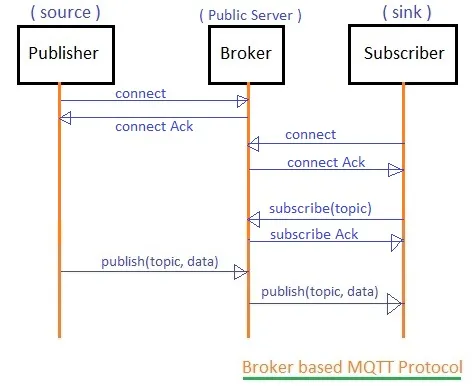
Figure 1 illustrates the typical MQTT protocol architecture. Let’s delve into its key features:
- MQTT stands for Message Queue Telemetry Transport.
- It’s built upon three core components: publishers, broker, and subscribers.
- MQTT follows a publish/subscribe architecture.
- Publishers, often sensors or IoT devices, transmit data or updates to the broker, categorized by topic.
- Subscribers are applications that register with the broker to receive updates related to specific topics or sensor data.
SMQTT Protocol
SMQTT builds upon the foundation of MQTT, adding a layer of security. Here’s a breakdown of its features:
- It’s an extension of the standard MQTT protocol.
- SMQTT stands for Secure Message Queue Telemetry Transport.
- It employs lightweight attribute-based encryption.
- SMQTT operates at the session layer.
- It incorporates broadcast encryption, allowing a single encrypted message to be delivered to multiple nodes efficiently.
- The algorithm is structured into four phases: setup, encryption, publish, and decryption.
- Like MQTT, SMQTT utilizes a broker-based publish/subscribe architecture.
- During the setup phase, publishers and subscribers register with the broker and obtain a master secret key.
- Before publishing, data undergoes encryption.
- The broker publishes the encrypted data, which is then received by the subscribers.
- Subscribers perform decryption to decode the data using the shared master key.
- The key generation algorithm is not standardized and is left to the developers’ discretion. Similarly, the choice of encryption algorithms also rests with the developers.
Continue Learning IoT Protocols
- MQTT Architecture: Message Types, Format, Flow
- CoAP Protocol Architecture & Messages Exchanged between client & Server
- DDS Architecture & its protocol stack layers
- AMQP Architecture Components & Frames
- REST Protocol Vs. SoAP
- XMPP Protocol & Server-Client Interaction
- LWM2M : Key Advantages and Disadvantages
- 6LoWPAN Mesh Network & Protocol Stack
- RPL vs CORPL vs CARP: IoT Routing Protocol Comparison
- HTTP Vs. HTTPS : Key Comparison
- FTP Protocol Basics : key advantages & disadvantages
- Ping vs. Ping6: IPv4 and IPv6 Connectivity
- SFTP Vs. SCP : key Differences
- SSL Vs. SSH : Key Comparison
- MPTCP Protocol : Key Advantages & Disadvantages
- What is QUIC (Quick UDP Internet Connections)?
- TCP-IP Packet Format & its fields with example
Compare IoT Protocols
- MQTT Vs. DDS Protocol
- MQTT Vs. REST Protocol
- CoAP Vs. MQTT : Key Differences
- CoAP Vs. HTTP : Comparison between them
- SFTP Vs. FTPS
- FTP Vs. HTTP : Key Differences between them
- FTP Vs. TFTP (Trivial File Transfer Protocol)
- FTP Vs. SMTP
- AMQP (Advanced Message Queuing Protocol) Vs. JMS(Java Message Service)
- TCP Vs. Multipath TCP (MPTCP)