
What is AeroMACS : Aeronautical Mobile Airport Communications System
Advertisement
AeroMACS (Aeronautical Mobile Airport Communication System) is a broadband wireless communication technology designed for airport surface operations. Based on IEEE 802.16 standards, it provides secure and reliable data connectivity between aircraft, vehicles and airport infrastructure, improving operational efficiency, safety and real time communication capabilities. Let us understand AeroMACS and explore its benefits.
Advances in telecommunication technologies are crucial for improving Air Traffic Management (ATM), reducing flight delays, alleviating airport congestion, and enhancing air safety and security. This necessitates improved communication links between aircraft and ground systems, which AeroMACS is designed to address.
What is AeroMACS?
- AeroMACS is a wireless broadband technology developed based on the IEEE 802.16e standard by the WiMAX Forum. The latest revision to the WiMAX standard is IEEE 802.16-2009.
- It operates in the protected and licensed frequency band of 5091 to 5150 MHz, as designated by the ITU at WRC.
- It supports channels with 5 MHz bandwidth, uses OFDMA modulation with complex modulation schemes (QPSK, 16-QAM, 64-QAM), and employs TDD duplexing.
- It supports an average data rate of about 5 to 10 Mbps and a coverage distance of approximately 5 km.
- It facilitates both fixed and mobile ground communications between aircraft and the air traffic control unit.
- When an aircraft is in the sky, communication between the aircraft and ground systems relies on existing VDL (VHF digital link) and future L-band satellite systems like LDACS.
- Upon landing, the aircraft establishes a connection with the AeroMACS network to exchange data with ground systems and utilize various ATM applications.
- The AeroMACS ecosystem comprises aviation authorities, airports, air carriers, network operators, equipment vendors, and service providers.
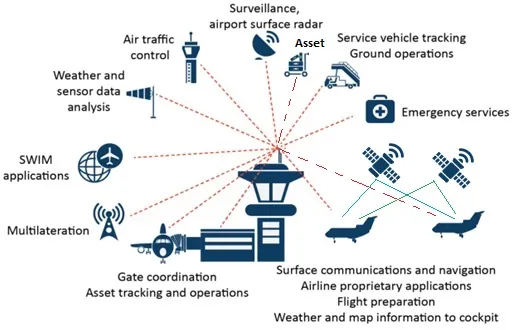
Figure 1 illustrates the various applications of the AeroMACS system.
Benefits and Advantages of AeroMACS
The following are the key benefits and advantages of the AeroMACS system:
- Improved Ground-to-Aircraft Communication: AeroMACS provides increased capacity and higher bandwidth compared to traditional wireline and existing wireless networks.
- Real-time Video Connectivity: Enables real-time support from medical personnel in emergency situations, providing crucial first aid guidance before the aircraft reaches the gate where full resources are available.
- Versatile Application Support: AeroMACS supports data, voice, and video applications, catering to diverse communication needs.
- Cost-Effective Deployment: Lower installation and maintenance costs compared to other expensive communication systems.
- Enhanced Security and Privacy: Supports AAA (e.g., PKMv2, EAP), encryption, digital certificates (e.g., ITU.T X.509, AES), and VPN protocols, ensuring secure and private communications.
Continue Learning Radio Navigation Systems (VOR, DME, TACAN & More)
Deep dives into the radio-based beacons, direction finders, and navigation systems that have guided aircraft for decades.
- ADF (Automatic Direction Finder) Basics
- VOR (VHF Omnidirectional Range) Basics
- DME (Distance Measuring Equipment) Basics
- TACAN (Tactical Air Navigation) System Basics
- VORTAC (VOR + TACAN) Navigation
- DME vs TACAN Air Navigation
- RNAV (Random or Area Navigation)
- LORAN (Long Range Navigation) Basics
- OMEGA Navigation System
- DNS (Doppler Navigation System)
- INS (Inertial Navigation System)
- Dead Reckoning Navigation System Basics
- Dead Reckoning Navigation Method
Precision Landing Systems
Explore More Aeronautical Communications & Satellite Navigation Fundamentals
- Air Traffic Management Explained: A Deep Dive into ATM & LDACS
- AeroMAC: Aeronautical Mobile Airport Communications System
- Avionic Systems & Navigational Aids
- B-AMC: Broadband Aeronautical Multi-Carrier Communication
- What is DGPS (Differential Global Positioning System)?
- GNSS vs GPS: Understanding the Difference
- Satellite Navigation: Advantages & Disadvantages