
BLE Electronic Shelf Labels: Architecture, Working & Design
Advertisement
BLE electronic shelf labels (ESLs) enable retailers to wirelessly update product prices, promotions, inventory information, and other shelf level content without requiring a wired connection to every display. This article explains BLE ESL architecture, working principles, hardware components, wireless communication, power management and design considerations for developing connected electronic shelf labels.
An ESL solution typically includes a low power BLE enabled label, electronic paper or other low power display technology, a wireless gateway or access point and backend software that manages content updates. BLE advertising and connected communication can be used according to the system architecture and data requirements, while careful power management is important because shelf labels are generally designed for long battery life.
BLE Electronic Shelf Label Architecture & its working
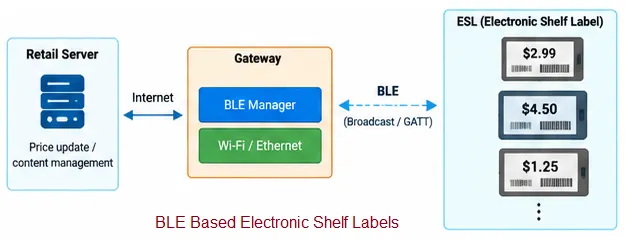 Figure-1 : BLE based ESL System Architecture
The figure depicts generic architecture of BLE based Electronic Shelf Labels (ESLs) use case. Typically Electronic Shelf Label (ESL) consists of MCU, BLE SoC, E-paper display, battery, antenna etc. Following steps describe working of this BLE Electronic Shelf Labels based system.
- Server sends new price/content to the BLE Gateway over IP via Wi-Fi or Ethernet.
- The Gateway broadcasts updates to multiple ESLs via BLE radio frequency.
- ESL receives data, updates e-paper display and goes back to sleep for ultra-low power.
E-paper display is bistable. After image is written, the display can retain it without continuous power. This is why ESLs can run for years using small batteries.
BLE Electronic Shelf Label Hardware Design
The common hardware design requires BLE SoC, Flash Memory, RAM, Antenna, Antenna matching circuit, battery, battery charging circuit, e-paper display, connector for the display, USB charging port etc. Following are some of the options to design and develop Electronic Shelf Labels.
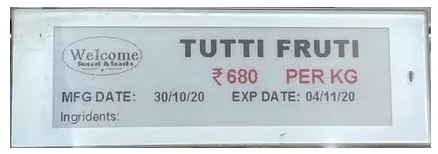 Figure 2 : Electronic Shelf Label Hardware
- BLE SoC nRF54LS05B or nRF54L10/nRF54L15 from Nordic Semiconductor
- EFR32BG24 from Silicon Labs. This Bluetooth SoC consists of Cortex-M33, bluetooth 5.3, 1 MB flash, 128 KB RAM etc.
- BG24 from Silicon Labs which is ideal for ESL-oriented software implementation and bluetooth 5.4 compliant.
- Another device BG2B is the latest and explicitly developed for ESL implementations. We can consider it to be ideal as ESL specific chip.
E-Paper Display :
There are many manufacturers of E-paper display such as Pervasive Displays, Good Display, E-ink Holdings Inc., LG, NEC, Samsung, Plastic Logic, Polymer Vision and Seiko Epson. E-paper displays are available in various sizes and hence selection depends on your design. The most common sizes are 2.13”, 2.6”, 2.71”, 4.2”, 7.4” etc.
E-paper display with part no. E2213KS0E1 from Pervasive Displays offers 2.13” size display, 212 x 104 pixels resolution, SPI controlled, Black/White etc.
BLE Electronic Shelf Label Firmware Development
The firmware development covers following requirements.
- The phone should be able to commission/configure/update an individual label.
- The Gateway/server should be able to manage thousands of labels.
- For mobile phone to ESL communication for image download and management, use custome GATT service.
Conclusion
In summary, Bluetooth Low Energy (BLE) has fundamentally transformed retail automation by making Electronic Shelf Labels (ESLs) highly scalable, energy efficient and cost effective. The architecture of a modern BLE ESL system seamlessly integrates centralized retail management software with BLE gateways to wirelessly manage thousands of low power e-paper displays
By leveraging BLE’s robust communication protocols and minimal power consumption, retailers can dynamically push real time pricing, inventory updates, and promotional data across the store floor without the constant need for battery replacements.
Continue Learning E-Paper Display and ESLs
- Advantages and disadvantages of E-Paper Display
- Advantages and disadvantages of Electronic Shelf Labels
Explore More BLE Use Cases
- BLE Asset Tracking: Tags, Beacons, Gateways & Architecture
- BLE Digital Car Keys: Architecture, Working, Benefits & Limitations
- BLE in Wearables: Architecture, Working, Benefits & Limitations
- BLE Smart Health Band: Architecture, Working, Hardware Design
Continue Learning Bluetooth Basic Concepts
- What are new features in Bluetooth 6.3 Version
- Bluetooth GATT Vs. ATT Vs. GAP : Key Comparison
- Bluetooth Service Vs. Characteristic Vs. Descriptor
- Bluetooth Central Vs. Peripheral : Key Differences
- Bluetooth pairing Vs. Bonding Phase
- Bluetooth Notifications Vs. Indications
- Bluetooth Channel Sounding Vs. RSSI
- Bluetooth Error Codes Guide : Meanings, Causes & Fixes
Continue Learning Bluetooth Technology
- Bluetooth Basics Tutorial
- Bluetooth Low Energy (BLE) Basics Tutorial
- Bluetooth Protocol Stack & Device State Diagram
- Bluetooth Physical Layer Modules
- Bluetooth MAC Layer Overview
- Bluetooth Channel Frequency List
- Bluetooth Network Security
- Bluetooth Low Energy (BLE) Connection Establishment Procedure
- Bluetooth Profiles: HFP, HSP, A2DP, AVRCP, PBAP & MAP
- Bluetooth Mesh Node Types & Protocol Stack Layer Functions
Compare Bluetooth With Other Technologies
- Bluetooth V5.0 Vs. V5.1 Vs. V5.2 Vs. V5.3
- Bluetooth Vs BLE : Key Differences
- Bluetooth Vs UWB Technology : Key Differences
- Bluetooth Vs Wi-Fi Vs UWB
Explore Deep Insight Bluetooth Technology
- Bluetooth AFH Explained: Adaptive Frequency Hopping & FAQs
- Bluetooth Error Recovery : ARQ, ACK, NAK
- Bluetooth Bit Stream Processing: HEC, CRC, FEC & More
- Bluetooth Routing: How Devices Know a Packet is for Them
- Bluetooth Flow Control: Understanding GO & STOP Bits
- Bluetooth Power Management: Sniff, Hold & Active Modes
- Bluetooth Packets Decoded: Structure, Types & Routing
- Decoding Bluetooth Packet Types: Control, ACL, SCO & eSCO