
What is Ultrasonic Diathermy: Advantages and Disadvantages
Advertisement
Ultrasonic diathermy is a therapeutic treatment that uses high frequency ultrasound waves to generate deep tissue heating for pain relief and healing. Its advantages include improved blood circulation and faster tissue recovery, while its disadvantages include treatment limitations for certain medical conditions and improper usage risks.
Ultrasonic Diathermy Block Diagram and Working principle
Diathermy employs electric current to generate heat deep within targeted tissue, reaching depths of up to two inches beneath the skin’s surface. Various techniques exist to generate heat in the targeted body part, including short wave, long wave, microwave, ultrasonic, and laser diathermy.
Ultrasound diathermy, specifically, uses high-frequency sound waves to treat deep tissues. The heat is produced by tissue vibration, which promotes blood flow to the area. It’s used for various musculoskeletal strains and fractures. These devices utilize sound waves in the 1 to 3 MHz range. 1 MHz is used for deep penetration (5 cm), while 3 MHz is used for superficial penetration (2 cm).
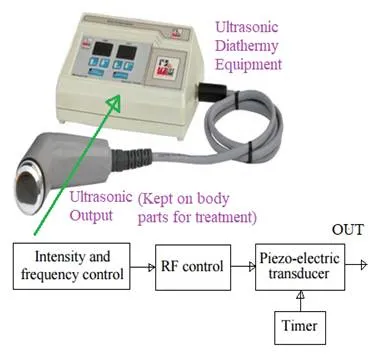
Figure-1 depicts Ultrasonic diathermy equipment with its internal modules.
The device operates on the principle that sound waves are absorbed by high-protein tissues such as tendons, ligaments, joint capsules, and muscle. Bone absorbs a significant amount of these waves.
Ultrasonic waves generate high-speed mechanical vibrations within the cells of absorptive tissues, providing a micro-level massage. The ultrasonic diathermy device employs a piezoelectric crystal, which generates ultrasonic energy when an oscillator output is applied.
The depth of penetration can be controlled, allowing for targeted treatment of specific tissues. It can be administered in two modes: pulsed and continuous.
Benefits or Advantages of Ultrasonic Diathermy
- Reduces Inflammation and Swelling: Helps reduce chronic inflammation and local swelling.
- Promotes Fracture Healing: Aids in the healing of bone fractures.
- Inexpensive and Non-Invasive: It is an inexpensive, quick, and non-invasive treatment option.
- Fetal Problem Detection: It can be used to detect fetus problems.
- Treats Collagenous Tissues: In continuous mode, it is used to heal dense collagenous tissues.
- Speeds Healing Process: Ultrasound energy causes rapid contraction and expansion of microscopic gas bubbles around the affected tissue, speeding up the healing process.
- Safe for Patient and Operator: No known hazards to either the patient or the operator.
- Controllable Parameters: Intensity and frequency can be controlled, allowing for targeted treatment at appropriate depths.
Drawbacks or Disadvantages of Ultrasonic Diathermy
- Frequency Limitations: Ultrasonic diathermy equipment can typically not generate ultrasonic frequencies above 3 MHz. Furthermore, oscillation frequency is temperature-dependent.
- Contraindications: Not recommended for patients with open wounds or pregnant women.
- Avoidance of Gas-Filled Areas: Ultrasound therapy cannot be used in areas containing gas, such as the lungs.
- Limited Bone Penetration: Provides inaccurate results in detecting physical abnormalities as it doesn’t pass through bones.
- Head and Neck Limitations: Has limited use in the head and neck region, as sound waves are significantly absorbed by bone, restricting its use to superficial structures.
Summary
Ultrasonic diathermy remains an effective physiotherapy technique for promoting tissue healing, reducing pain, and improving mobility when applied appropriately.
Continue Learning Medical Ultrasound & Imaging
- Ultrasound : Key Applications & Benefits
- Ultrasound: Advantages and Disadvantages
- Ultrasound vs X-Ray Comparison
- Ultrasonic Sensor Construction and Working Principle
- Ultrasonic vs Infrared Sensors: Understanding the Differences
Explore Industrial Ultrasonic Applications
- Ultrasonic Cleaner Basics
- RF Welding vs Ultrasonic Welding
- Short Wave vs Microwave vs Ultrasonic Diathermy
- Ultrasonic Flow Meter Basics
- Ultrasonic Water Meter: Advantages & Disadvantages
- Ultrasonic Gas Leak Detector
Explore Specific Treatments & Monitors
- RF Ablation: Uses, Benefits, and Risks
- RF Ablation: Advantages & Disadvantages
- Microwave Ablation
- RF Chemotherapy: Advantages and Disadvantages
- RF Chemotherapy Overview
- Electrosurgery: Advantages and Disadvantages
- Diathermy: Advantages and Disadvantages
- Microwave Diathermy: Advantages and Disadvantages
- Short Wave Diathermy: Advantages and Disadvantages
- Digital Blood Pressure Monitor: How It Works
- Electronic Pills: Advantages & Disadvantages
- Myoelectric Prosthesis Arm