
What is an Electronic Pill : Advantages and Disadvantages
Advertisement
An electronic pill is a swallowable medical device equipped with sensors, cameras, or communication modules used for diagnostics, monitoring, and drug delivery. It enables non-invasive examination of internal organs and patient health tracking. Advantages include patient comfort and real-time data collection, while disadvantages include high cost and limited battery life.
Types & working of Electronic Pill
After years of research, wireless devices have been developed in capsule form for various disease analysis and treatment applications. These electronic pills aim to replace invasive methods like catheters, endoscopic instruments, or radioisotopes when collecting information about the digestive tract. Drug delivery via electronic pills can be precisely controlled with onboard electronics, enabling adaptable delivery patterns not achievable through other methods.
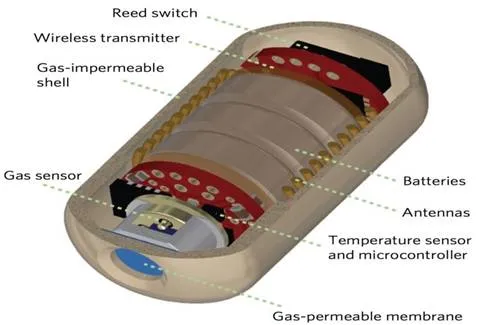
Image Courtesy: MEEE Services
As shown in the image, an electronic pill typically consists of a drug reservoir, delivery pump, Microcontroller Unit (MCU), wireless transmitter/receiver, sensors, and other components. Electronic pills are either swallowed and pass through the gastrointestinal tract, or they are implanted under the skin.
Electronic pills can be classified into two main types:
- Data Collection Pills: These pills house a camera and other parts that collect data from disease infected areas and transmit it to an external system for further analysis.
- Sensor Pills: These pills contain only sensors used to measure pH levels, temperature, oxygen levels, and other relevant parameters.
Benefits or Advantages of Electronic Pills
The following are the main benefits of using electronic pills:
- Disease Detection: They can be used for early disease detection and to identify abnormalities within the body.
- Small Size: Their small size allows them to easily move through the digestive system.
- Accuracy and Effectiveness: They offer a high degree of accuracy, precision, and effectiveness in their intended function.
- Sensitivity and Reliability: They offer high sensitivity, good reliability, and long lifetimes.
- Energy Efficiency: They have a long cell life (around 40 hours) with low power consumption (approximately 12.1 mWatt), low current (about 3.9 mA), and low voltage (about 3.1V) requirements.
- Biocompatibility: They are made of biocompatible materials that don’t cause harm to the body.
Drawbacks or Disadvantages of Electronic Pills
Here are the main challenges and disadvantages associated with electronic pills:
- Risk of Obstruction: Patients with gastrointestinal structures or narrowing are not ideal candidates due to the risk of obstruction. However, nanotechnology-based motors, about the size of a grain of rice, are being developed to help overcome this issue.
- Limited Camera Control: For camera-type electronic pills, controlling the camera’s behavior can be challenging. Bi-directional telemetry cameras are helping to address this limitation.
- Potential for Getting Stuck: The electronic pill can get stuck if there’s a partial obstruction in the small intestine.
- High Cost: They can be very expensive, making them unaffordable for some patients.
- Single Use: They are generally not reusable.
Summary
Electronic pills provide advanced medical monitoring and diagnostics through ingestible electronics. Advantages include non-invasive testing and improved patient care, while disadvantages include cost and operational limitations.
Explore Specific Treatments & Monitors
- RF Ablation: Uses, Benefits, and Risks
- RF Ablation: Advantages & Disadvantages
- Microwave Ablation
- RF Chemotherapy: Advantages and Disadvantages
- RF Chemotherapy Overview
- Electrosurgery: Advantages and Disadvantages
- Diathermy: Advantages and Disadvantages
- Microwave Diathermy: Advantages and Disadvantages
- Short Wave Diathermy: Advantages and Disadvantages
- Ultrasonic Diathermy: Advantages and Disadvantages
- Digital Blood Pressure Monitor: How It Works
- Myoelectric Prosthesis Arm
Explore Smart Healthcare, IoT & Telemedicine
- IoT Based Healthcare System Architecture
- Advantages and Disadvantages of IoMT (Internet of Medical Things)
- Telemedicine: Advantages and Disadvantages
- Top AI Telemedicine Platforms in India
- Top M2M Healthcare Companies
- Zigbee / LoRaWAN Smart Healthcare System
- Smartphone Biosensor Applications (MediaTek App Note)