
Semi-Active vs. Passive vs. Active Radar Homing: Key Differences
Advertisement
This page compares semi-active radar homing, passive radar homing, and active radar homing, highlighting the differences between semi-active, passive, and active radar homing missile systems.
Introduction
Radar homing guidance is a common guidance system for anti-air missiles. Based on their operation, there are three types of radar homing missile systems: semi-active, passive, and active.
Semi-Active Radar Homing
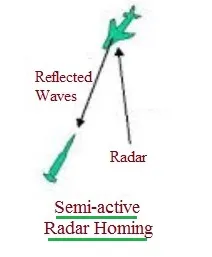
Figure-1 depicts Semi-active Radar Homing working operation.
Here are the features of Semi-active Radar Homing:
- It uses only a receiver, while the target is illuminated by a nearby radar or another external source.
- The reflected energy from the target is received by the receiver mounted on the missile.
- A computer connected to the receiver determines the relative trajectory of the target. This information is used by the missile system to accurately intercept the target.
- It’s used for long-range air-to-air and ground-to-air missile systems.
- It’s used for “all-weather” guidance systems as an anti-aircraft system.
Example: 1st generation SAM used by the RSAF
Active Radar Homing
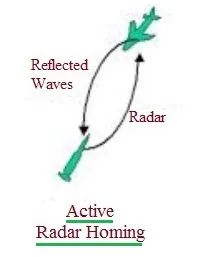
Figure-2 depicts Active Radar Homing working operation.
Here are the features of Active Radar Homing:
- It transmits energy and receives the reflected energy. Unlike semi-active systems, the missile itself houses both transmitter and receiver components.
- No external source is needed in this radar homing system.
Examples:
- AMRAAM air-to-air missile
- Exocet anti-ship missile
AMRAAM AIM-120 is a combination of both active and semi-active homing. It supports a medium range of about 50 km.
Passive Radar Homing
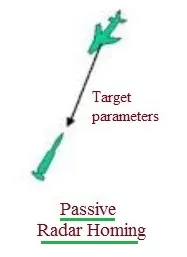
Figure-3 depicts Passive Radar Homing working operation.
Here are the features of Passive Radar Homing:
- It uses heat radiation from the target. The heat energy is used by the missile to determine the target’s parameters.
- It’s independent of any external guidance system.
- It only receives the signal and cannot transmit the signal, similar to semi-active radar homing systems.
Examples:
- Mistral deployed by the RSAF is a passive infrared homing guidance system.
- AIM9L/M passive IR homing guidance seeker
- Semi-active and active homing missiles can be detected easily.
- Passive homing missiles are difficult to detect and easier to break lock on.
Compare Radar With Other Technologies
- Radar Vs. LiDAR : Key Differences
- Radar Vs. SONAR : Key Differences
- Radar Vs. PIR Motion Sensors
- Radar Sensing Vs. Wi-Fi Sensing
- UWB Vs. PIR Vs. mmWave Radar: Key differences
Continue Learning Radar Technology
- Radar Tutorial: Types and Applications
- Radar Architecture Components & Functions
- Radar Duplexers: Types and Functionality
- Radar Classifications or Types
- Radar : Key Advantages & Disadvantages
- Radar Frequency Bands Chart
- Radar - Transmitter & Receiver Measurements
- Active Radar Vs. Passive Radar : Key Differences
- Radar Terminologies