
MPLS vs VPLS: Understanding the Key Differences
Advertisement
This article compares MPLS (Multiprotocol Label Switching) and VPLS (Virtual Private LAN Service), highlighting the differences between the two technologies.
MPLS - Multiprotocol Label Switching
MPLS stands for Multiprotocol Label Switching.
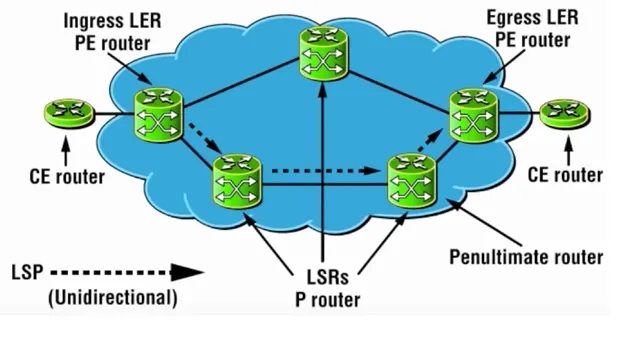
As the name suggests, MPLS is a method of forwarding data packets based on labels. An MPLS network typically consists of Customer Edge (CE) routers and Provider Edge (PE) routers, as shown in Figure 1 (not included here, see link above). For more in-depth information, refer to MPLS tutorials and resources on BGP and MPLS in VPNs.
VPLS - Virtual Private LAN Service
VPLS stands for Virtual Private LAN Service.
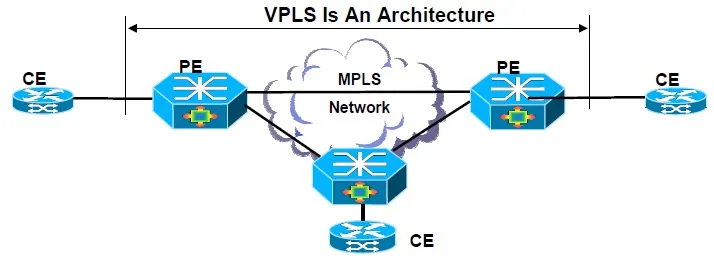
Defined in RFC 4762, VPLS is an architecture that delivers Ethernet Multipoint Services (EMS) over an MPLS network. Figure 2 (linked above) illustrates the typical VPLS architecture.
- VPLS operation emulates an IEEE Ethernet bridge.
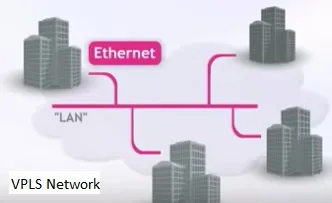
Similar to MPLS-based IP VPN services, VPLS-based VPNs are multipoint services. However, unlike IP VPNs, VPLS can transport non-IP traffic. Here are some key features of VPLS-based VPNs (Virtual Private Networks):
- It’s a Layer 2 multipoint VPN.
- It allows multiple sites to be connected in a single bridged domain over a provider-managed IP MPLS network.
- All customer sites within the VPLS-based VPN appear to be on the same LAN, regardless of their actual geographic location.
- It uses Ethernet interfaces, eliminating traditional LAN and WAN boundaries, and enabling rapid and flexible provisioning.
Key Components of a VPLS Network
There are three main components in a VPLS network:
- CE Devices (Customer Edges): These are router or switch devices located at the customer’s premises.
- PE Devices (Provider Edges): This is where the core intelligence of the VPN network resides. All PEs are interconnected, and CEs connect with their peer PEs.
- MPLS Network: All PEs are connected via an MPLS IP network. Traffic is switched based on MPLS labels. Refer to resources on MPLS label switching for further details.
Continue Learning MPLS
Continue Learning Core Networking : TCP, IP & UDP
- OSI vs TCP/IP Models
- Understanding TCP/IP Packet Format
- TCP vs UDP: Key Differences
- TCP vs MPTCP (Multipath TCP)
- IPv4 vs IPv6
- MPLS Label Switching vs IP Packet Switching
- Non-IP Networking: Working, Protocols & Benefits