
What are Network Switches: 5 Advantages and Disadvantages
Advertisement
A network switch is a networking device that connects multiple devices within a local area network and intelligently forwards data based on MAC addresses. Its advantages include efficient traffic management, improved network performance, and dedicated bandwidth, while its disadvantages include configuration complexity, equipment cost, and potential single points of failure.
Key Features of networking Switch
Introduction: A network switch is a networking device that forwards data only to the specific host for which it is intended. It examines the destination address of each data packet and routes it accordingly.
Here are some key features of network switches:
- Operates at Layer 2 (Data Link Layer) of the OSI model.
- Available in various configurations and data transfer speeds, such as 10/100/1000 Mbps or 10/100 Gbps.
- Operates in full-duplex mode, allowing simultaneous sending and receiving of data.
- Reduces packet collisions due to port-to-port data transmission.
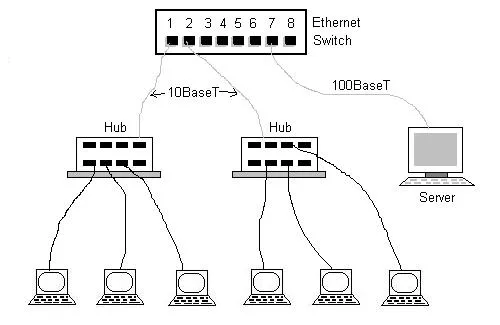
Benefits or Advantages of network switches
- Increased Bandwidth: Switches increase the available bandwidth of the network.
- Reduced Workload: They help reduce the workload on individual host PCs.
- Improved Performance: Switches enhance the overall performance of the network.
- Fewer Collisions: Networks using switches experience fewer frame collisions. This is because switches create separate collision domains for each connection.
- Direct Workstation Connection: Switches can be directly connected to workstations.
Drawbacks or Disadvantages of network switches
- Higher Cost: Switches are generally more expensive compared to network bridges.
- Troubleshooting Complexity: Network connectivity issues can be more difficult to trace through a network switch.
- Broadcast Traffic Concerns: Excessive broadcast traffic can sometimes be problematic.
- Security Vulnerabilities: If switches are in promiscuous mode, they become vulnerable to security attacks, such as IP address spoofing or capturing Ethernet frames.
- Complex Multicast Configuration: Proper design and configuration are needed to handle multicast packets effectively.
- Broadcast Limitation: While they limit broadcasts, they are not as effective as routers in controlling network traffic.
Summary
Network switches form the foundation of modern Ethernet networks by enabling high-speed, reliable communication between computers, servers, storage systems, and connected devices. Their networking advantages improve scalability, security, and overall network efficiency, although careful configuration and redundancy planning enhance long-term reliability.
Continue Learning Core Networking : TCP, IP & UDP
- OSI vs TCP/IP Models
- Understanding TCP/IP Packet Format
- TCP vs UDP: Key Differences
- TCP vs MPTCP (Multipath TCP)
- IPv4 vs IPv6
- MPLS Label Switching vs IP Packet Switching
- Non-IP Networking: Working, Protocols & Benefits