
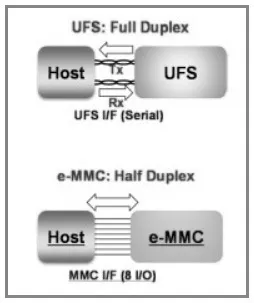
Difference between UFS 2.0 vs UFS 2.1 vs UFS 3.0 vs UFS 3.1
This page compares UFS 2.0 vs UFS 2.1 vs UFS 3.0 vs UFS 3.1 and mentions difference between UFS 2.0, UFS 2.1, UFS 3.0 and UFS 3.1 with respect to speed and IOP/sec.
Advertisement
Trace every article connected to this tag across guides, explainers, and practical RF topics. This view is especially useful when the same concept spans multiple categories.
Articles
8
Showing
1-8
Pages
1/1
Where this tag appears most
Open the categories where this topic shows up most often.
Advertisement
Tagged Articles
Showing 1-8 of 8 articles tagged with Memory Technology.
This page compares UFS 2.0 vs UFS 2.1 vs UFS 3.0 vs UFS 3.1 and mentions difference between UFS 2.0, UFS 2.1, UFS 3.0 and UFS 3.1 with respect to speed and IOP/sec.
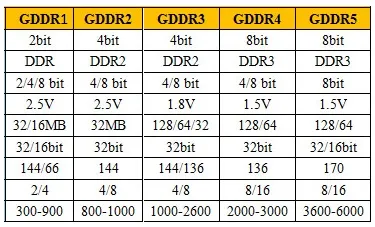
A comparison of GDDR memory versions (GDDR1-GDDR6) covering their key features, speeds, and applications in graphics cards and other high-performance systems.
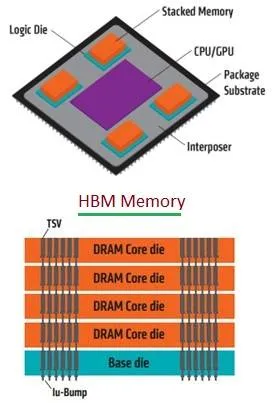
Explore the key differences between GDDR and HBM memory, including their architecture, performance, power efficiency, and cost. GDDR6 and HBM2 examples are used.
Explore Magnetoresistive Random Access Memory (MRAM) technology, its types (Toggle, STT, SOT), benefits, drawbacks, and applications, offering a unique alternative to DRAM and flash.
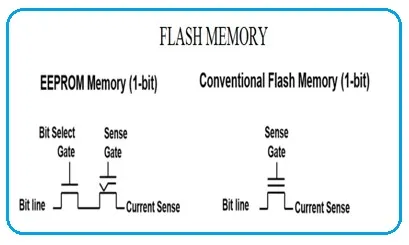
Explore advantages and disadvantages of flash memory, a non-volatile storage used in USB drives and SSDs. Understand its speed, durability, limitations, and applications.
Explore 5 pros and cons of MRAM, a non-volatile memory technology, including its speed, endurance, power consumption, cost, and density compared to DRAM and flash memory.
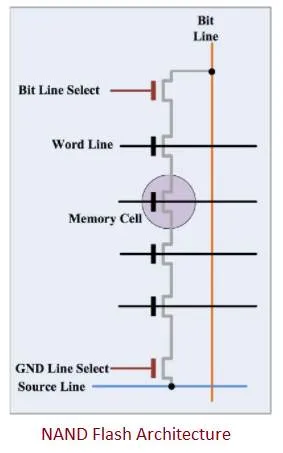
Explore the benefits and drawbacks of NAND flash memory, including cost, speed, power consumption, and reliability compared to NOR flash.
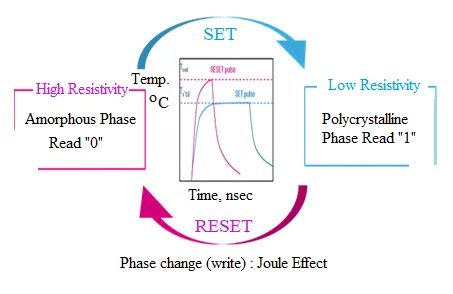
Explore the pros and cons of Phase Change Memory (PRAM), including its operating principles, advantages like fast switching and scalability, and disadvantages like temperature sensitivity.
Advertisement