
4D NAND Flash: Advantages, Disadvantages, and Applications
Explore 4D NAND Flash technology, its benefits, drawbacks, and wide-ranging applications in modern data storage solutions.
Advertisement
Trace every article connected to this tag across guides, explainers, and practical RF topics. This view is especially useful when the same concept spans multiple categories.
Articles
9
Showing
1-9
Pages
1/1
Where this tag appears most
Open the categories where this topic shows up most often.
Advertisement
Tagged Articles
Showing 1-9 of 9 articles tagged with Flash Memory.
Explore 4D NAND Flash technology, its benefits, drawbacks, and wide-ranging applications in modern data storage solutions.
Learn the basics of eMMC (Embedded MultiMedia Controller), its architecture, applications, and key manufacturers. eMMC integrates flash memory and a controller in a single package.
Learn the distinctions between EPROM, EEPROM, and Flash EPROM, covering cell size, programming, erasing techniques, voltage, and performance.
Explore the key differences between NOR and NAND flash memory used in mobile phones, including capacity, performance, reliability, and typical applications.
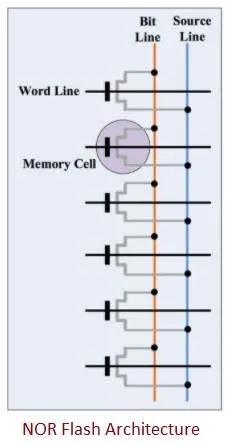
Explore the architectural and performance differences between NAND and NOR flash memory, including speed, cost, and applications.
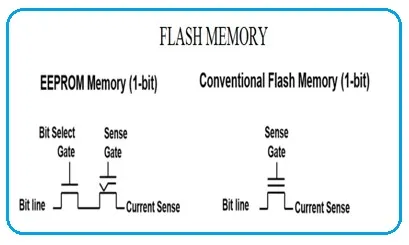
Explore advantages and disadvantages of flash memory, a non-volatile storage used in USB drives and SSDs. Understand its speed, durability, limitations, and applications.
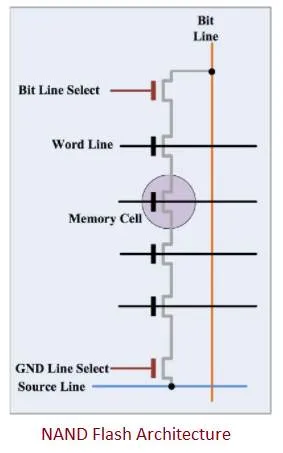
Explore the benefits and drawbacks of NAND flash memory, including cost, speed, power consumption, and reliability compared to NOR flash.
Explore the pros and cons of NOR flash memory, covering its architecture, speed, data retention, and cost compared to NAND flash.
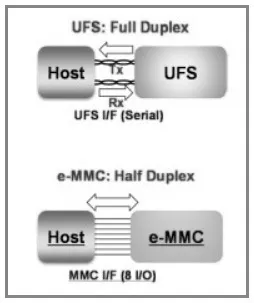
Explore the advantages of UFS storage (versions 2.0 to 3.1) over e-MMC, including enhanced speed, lower latency, reduced power consumption, and improved IOPS in mobile devices.
Advertisement