
What is WSF : Wavelength Selective Filtering
Advertisement
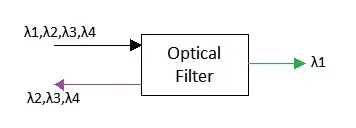
Wavelength Selective Filtering (WSF) is an optical networking technique that selectively transmits, blocks or routes specific wavelengths within a fiber optic system. WSF improves bandwidth management, signal routing flexibility and network efficiency, making it a critical technology in DWDM and advanced optical communication networks.
In other words, Wavelength Selective Filtering (WSF) is a technique employed in optical systems to control and manipulate light based on its wavelength. This method is pivotal in various applications where precise control over specific wavelengths is essential.
Types of Wavelength Selective Filters
- Interference Filters
- Dichroic Filters
- Absorptive Filters
- Fiber Bragg Gratings (FBGs)
- Volume Bragg Gratings (VBGs)
Applications of Wavelength Selective Filtering
- In wavelength division multiplexing (WDM) systems, wavelength selective filters enable the multiplexing and demultiplexing of multiple optical signals over a single fiber, increasing the data transmission capacity.
- In spectroscopy, filters isolate specific spectral lines for analysis, enhancing the accuracy and sensitivity of spectroscopic measurements.
- In fluorescence microscopy, selective filters separate excitation and emission wavelengths which improves image contrast and clarity.
- In laser systems, filters manage the spectral properties of laser beams. This ensures the desired wavelength is utilized for applications like material processing or medical procedures.
Conclusion: WSF is a fundamental technique in optical engineering. It enabling precise control over the spectral components of light. By employing various types of filters, systems can be tailored to specific applications, enhancing performance and functionality across multiple fields.
Continue Learning Filter Fundamentals & Terminology
- Lumped Element Filter : Key Advantages & Disadvantages
- Microstrip Based RF Low Pass Filter Design Example
- Understanding Filter Terms
- RF Filters : Types, Selection Guide, Advantages & Disadvantages
- Active vs Passive Filters
- Analog vs Digital Filters
- Butterworth, Chebyshev, Bessel, and Elliptic Filters
- FIR Filter vs IIR Filter
- Understanding CIC (Cascaded Integrator-Comb) Filters
- Pi Filter: Advantages & Disadvantages
- Active vs Passive Harmonic Filters