
What is Superheterodyne Receiver : Advantages and Disadvantages
Advertisement
A superheterodyne receiver is a radio receiver architecture that converts incoming signals to a fixed intermediate frequency (IF) for easier amplification and filtering. It is widely used in radios, televisions, and communication equipment. Advantages include excellent sensitivity and selectivity, while disadvantages include image frequency interference and more complex circuitry.
Heterodyne and Superheterodyne Receiver Architectures
- A Heterodyne receiver uses a single RF mixer to convert a modulated RF signal to baseband I/Q signals.
- A Superheterodyne receiver employs dual RF mixers for the same conversion process.
Both heterodyne and superheterodyne receivers use a Local Oscillator (LO) frequency that is different from the received signal frequency.
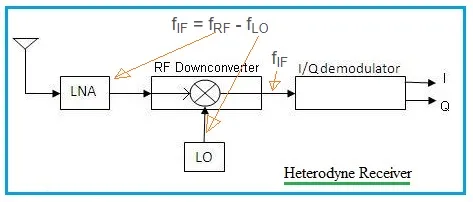
Figure 1: Heterodyne receiver architecture
In the heterodyne receiver (Figure 1), the Intermediate Frequency (IF) is calculated as:
fIF = fRF - fLO
To understand more about up and down conversion, refer to RF Mixer basics and the RF Mixer tutorial.
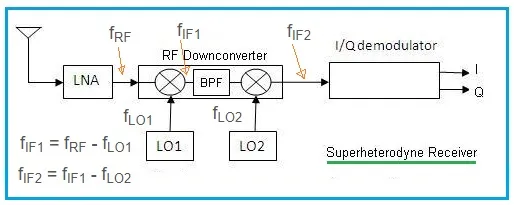
Figure 2: Superheterodyne receiver architecture
The superheterodyne receiver (Figure 2) uses a two-stage down conversion process. The equations are:
fIF1 = fRF - fLO1 (Equation 1, Stage I)
fIF2 = fIF1 - fLO2 (Equation 2, Stage II)
The modulated fIF2 is then processed to get baseband I/Q signals at zero frequency.
You may want to refer to Homodyne Vs Heterodyne Receiver for additional information.
Advantages of Super-heterodyne Receiver
The following are the benefits of heterodyne receiver architecture:
- Lower Frequency Processing: Converting the high RF frequency to a lower IF allows all subsequent processing to occur at these lower frequencies. Components are generally cheaper at lower frequencies compared to higher ones.
- Easier Filtering: It’s easier to filter the IF signal compared to filtering the original RF signal.
- Better Sensitivity: Superheterodyne receivers offer better sensitivity compared to homodyne receiver architectures.
- Image Noise Reduction: The superheterodyne receiver architecture, with its dual conversion, helps prevent image noise foldover due to the use of two IF frequencies before conversion to baseband. The heterodyne receiver architecture uses single conversion.
Disadvantages of Super-heterodyne Receiver
The following are the drawbacks of heterodyne receiver architecture:
- Increased Complexity and Cost: Superheterodyne receivers require additional Local Oscillators (LOs) and RF mixers to convert the signal from RF to IF before converting to baseband. This increases the overall receiver cost.
- Need for Additional Filtering: Filters are also needed to remove any LO leakage and undesired frequency components to prevent image frequencies. This further adds to the cost and complexity of the receiver.
Summary
Superheterodyne receivers improve signal reception through frequency conversion techniques. Advantages include high sensitivity and selectivity, while disadvantages include image frequency issues and increased design complexity.