
What is concealed wiring : Advantages and disadvantages
Advertisement
Concealed wiring is an electrical installation method where wires are hidden inside walls, ceilings, or conduits, providing a neat and aesthetically pleasing appearance. It is commonly used in residential and commercial buildings. Advantages include enhanced safety and appearance, while disadvantages include higher installation costs and maintenance difficulties.
Introduction : Concealed wiring, as the name suggests, is a wiring method where electrical wires are hidden from view, typically installed beneath the plaster of walls during building construction. It’s known to be a more complex installation compared to other methods.
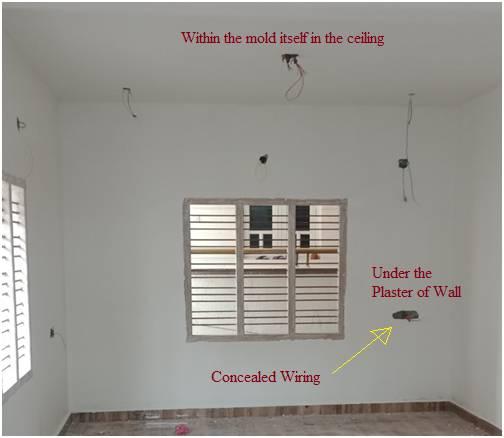
The image above illustrates the process. Pipes are laid within the wall during the construction phase, containing metal wires. This setup allows for the easy placement of electrical wires within the ceiling later on.
The key characteristic of concealed wiring is that the wires and pipes are hidden within the wall, unlike open wiring systems. This means only plates, switches, and sockets are visible, contributing to a cleaner and more aesthetically pleasing room.
Advantages of Concealed Wiring
- Safe: Offers enhanced safety compared to exposed wiring.
- Better Appearance: Provides a cleaner and more visually appealing look.
- No Risk of Fire: Reduces the risk of fire hazards.
- No Risk of Damage of Cable Insulation: Protects the cable insulation from physical damage.
- Safe from Humidity, Smoke and Steam etc.: Shields the wiring from environmental factors.
- No Risk of Shock: Minimizes the risk of electric shock.
- Long Lasting: Generally has a longer lifespan compared to other wiring methods.
Disadvantages of Concealed Wiring
- Expensive: More costly to install than other wiring methods.
- Installation is not easy: Requires skilled labor and is more complex to install.
- Not easily customizable in future: Making changes or additions can be difficult and costly.
- Hard to detect the faults: Identifying and repairing faults can be challenging due to the hidden nature of the wiring.
- Requires More Space: Concealed wiring systems need additional space within walls, ceilings or floors for conduits and junction boxes, which may not be feasible in structures with limited space or during renovations.
Summary
Concealed wiring improves building aesthetics and electrical safety by hiding cables within structures. Advantages include protection and appearance, while disadvantages include installation complexity and repair challenges.
Advertisement


