
What is Alcohol Sensor : Advantages and Disadvantages
Advertisement
An alcohol sensor is an electronic device used to detect and measure alcohol concentration in breath, air or liquids. It is widely used in breathalyzers, automotive safety systems and industrial monitoring. Advantages include rapid detection and safety enhancement, while disadvantages include calibration requirements and sensitivity to environmental conditions.
Introduction
Alcohol, also known as ethanol, is a common element found in beverages like liquor, beer and wine. When consumed, alcohol is absorbed into the bloodstream. Excessive consumption can lead to intoxication or drowsiness. Driving under such conditions significantly increases the risk of fatal accidents.
MQ-3 Alcohol Sensor Example & its working
An alcohol sensor, or alcohol detector, is a small semiconductor device that detects the presence of alcohol gas in the air. Common examples include MQ3 and MQ135 sensors. The MQ-3 is frequently used in breath analyzers, portable alcohol detection devices, background sensing equipment, gas level alarms, and environmental monitoring.
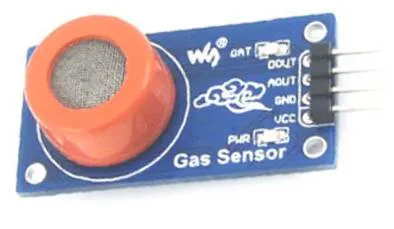
Figure 1: MQ-3 Alcohol Sensor
As shown in Figure 1, the MQ-3 alcohol sensor has four pins:
- AOUT: Analog Output, providing a voltage range from 0 to 5V based on the gas intensity.
- DOUT: Digital Output, delivering TTL logic levels (binary 0 and 1) corresponding to 0.1V and 5V, respectively. DOUT’s output is proportional to AOUT.
- VCC: Power supply.
- GND: Ground.
These pins allow the sensor to be easily connected to Arduino boards or microcontroller circuits.

Figure 2: Alcohol Sensor Working
MQ-3 sensors use SnO2 (tin dioxide) material, which exhibits low conductivity in fresh air. When alcohol gas is present, the conductivity of the sensor increases. In other words, the sensor’s resistance decreases as the alcohol concentration increases. This change in resistance provides an analog output that corresponds to the alcohol concentration in the air. Figure 2 illustrates how an LED lights up when alcohol is brought near the sensor.
Advantages of Alcohol Sensors
The following are the benefits of using alcohol sensors:
- Low Cost: Alcohol sensors are available at a relatively low price.
- Long Life Cycle: They have a long operational lifespan.
- High Stability: Alcohol sensors offer good stability in their readings.
- High Sensitivity and Fast Response Time: They are highly sensitive to alcohol and provide a quick response.
- Simple Drive Circuit and Ease of Use: They require a simple driving circuit and are straightforward to use.
- Easy Microcontroller Interfacing: They can be easily interfaced with microcontrollers.
- Safety Features: Alcohol sensor-based systems in cars can prevent drunk driving, allowing other family members to drive. Additionally, they can protect the car from unauthorized access.
Disadvantages of Alcohol Sensors
The following are the drawbacks of using alcohol sensors:
- Expensive Breath Analyzers: Breath analyzers utilizing alcohol detection can be expensive.
- Shorter Lifetime: Breath analyzers can have a shorter operational lifetime compared to the sensors themselves.
- Continuous Re-Calibration: Breath analyzers often require continuous re-calibration to maintain accuracy.
Summary
Alcohol sensors measure alcohol concentration for safety and monitoring applications. Advantages include quick detection and reliability, while disadvantages include maintenance and calibration requirements.