Purchase Order vs. Invoice: Key Differences Explained
Understand the difference between a purchase order (PO) and an invoice. A PO is a request from buyer to seller, while an invoice is the bill from seller to buyer.
Advertisement
Explore articles, explainers, and practical references focused on Other Wireless within Terminology.
Articles
714
Showing
301-325
Pages
13/29
More in Terminology
Jump across related topic clusters without losing your place.
Advertisement
Article Index
Showing 301-325 of 714 articles in this archive.
Understand the difference between a purchase order (PO) and an invoice. A PO is a request from buyer to seller, while an invoice is the bill from seller to buyer.

Explore the differences between PWM and MPPT solar charge controllers, detailing their function, efficiency, cost, and applications in solar power systems.
Understand PWT, the US equivalent of DECT, including its key features, specifications, and how it compares to other wireless technologies.

Explore the distinctions between QR codes and barcodes, including their generation, scanning, and interpretation processes.
Explore the fundamental differences between quantum and classical computers, focusing on information storage, processing, and underlying principles.
Explore quantum computing's principles, benefits like speed and parallelism, and drawbacks such as error susceptibility and limited applications.
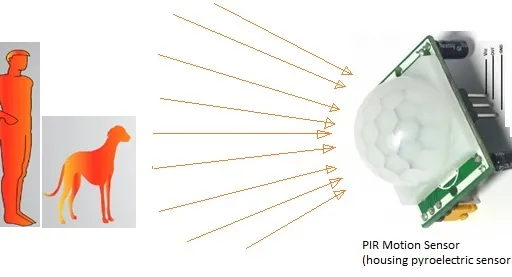
Explore the distinctions between radar and PIR motion sensors, including their technologies, detection ranges, advantages, and disadvantages for various applications.
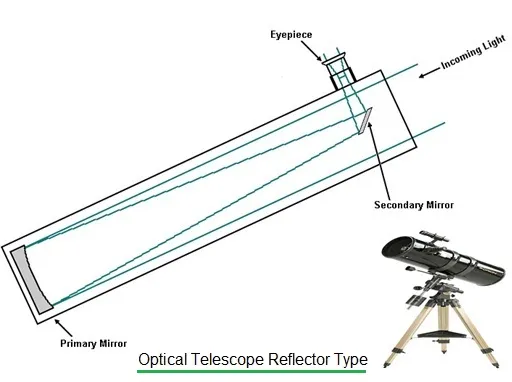
Explore the key differences between radio and optical telescopes, their operation, and their unique applications in astronomy.

Explore the differences between radio waves and light waves, focusing on their use in WiFi and LiFi technologies. Understand the advantages and limitations of each.
Explore the distinctions between RDS (used in Europe) and RBDS (used in the USA) in FM radio broadcasting, highlighting key differences in program type codes, identification, and service names.
Explore the differences between RDS and RDS-2, including specifications, features, and applications in FM and digital radio.
Explore how remote sensing uses satellites and sensors to monitor Earth's environment and temperature, offering insights for climate monitoring, agriculture, and urban planning.
Explore the critical differences between renewable and non-renewable energy sources, including their availability, environmental impact, and sustainability.

Explore the differences between resonant and non-resonant metamaterials. Learn about their properties, mechanisms, and applications in manipulating electromagnetic waves.
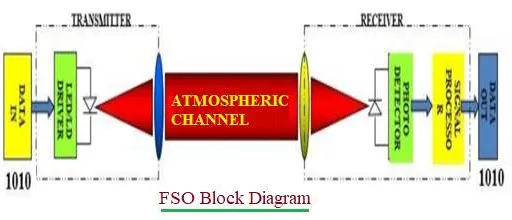
Explore the differences between RF (Radio Frequency) and FSO (Free Space Optics) technologies for wireless communication. Compare bandwidth, security, applications, and more.
Explore the differences between RFID and NFC, two wireless technologies. Learn about their frequencies, range, applications, and key distinctions.

Explore the distinctions between RGB and DVI video connections. Learn about their signaling types, picture quality, resolution capabilities, and connector types.

Explore the core distinctions between RISC and CISC architectures, comparing instruction sets, performance, and design complexities to help you choose the right processor.
Explore the distinctions between RISC and general-purpose CPUs, focusing on architecture, instruction sets, power consumption, and typical applications.

Explore the key differences between Radio Magnetic Indicator (RMI) and Horizontal Situation Indicator (HSI) systems used in aircraft navigation. Learn about their functionalities and features.

Understand RNAV (Random/Area Navigation), an avionic system using waypoints for optimized air routes. Learn about its advantages, disadvantages, and working principles.

This article compares robots and cobots, highlighting their definitions, functions, and key differences in automation and collaboration.
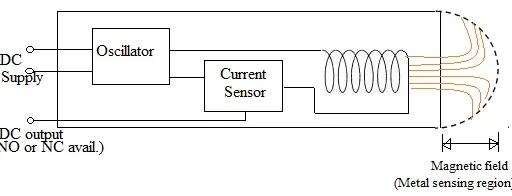
Explore the diverse range of sensors used in robotics, enabling robots to interact with their environment through sight, sound, touch, and more.

Explore the RS (Reed-Solomon) encoder, a forward error correction technique used in wireless communication systems. Understand its implementation with examples.
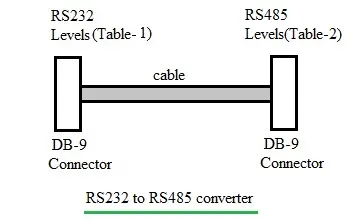
Understand RS232 to RS485 and RS485 to RS232 converters, their functions, and pin configurations. Learn how they convert signal levels for different communication standards.
Advertisement