
What is Tunable Laser & its Function in Fiber Optics
Advertisement
A tunable laser is a laser source capable of adjusting its output wavelength over a specified range. Tunable lasers are widely used in optical communications, DWDM systems, spectroscopy, sensing, research and photonic testing applications where precise wavelength selection and flexibility are required. LASER stands for “Light Amplification by Stimulated Emission of Radiation.”
Essentially, a laser is a light source. It generates coherent and near-monochromatic light through stimulated emission. A semiconductor device operating on this principle is called a “Laser Diode.” The primary function of a laser device, or laser diode, is to convert an electrical signal into light. Traditional laser devices are fixed; they don’t offer control over the output wavelength.
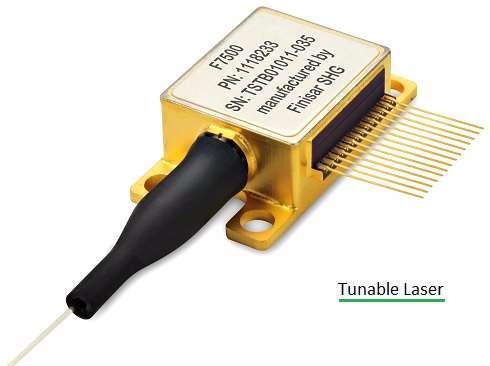
Tunable Laser model Finisar S7500 from QUAGWIRE TECHNOLOGIES LLC
As the image shows, a tunable laser allows for continuous adjustment of the emission wavelength. This gives the user control over the wavelength of the output light signal, which is crucial when using it as an input for transmission over a fiber optic network. In essence, you can “tune” the laser to the optimal wavelength for your application.
Advertisement


