
What is Optical Transceiver Explained: Function and Basics
Advertisement
An optical transceiver is a communication device that combines optical transmission and reception functions within a single module. It converts electrical signals into optical signals and vice versa, enabling high speed data communication in fiber optic networks, data centers, telecommunications systems and enterprise networking environments.
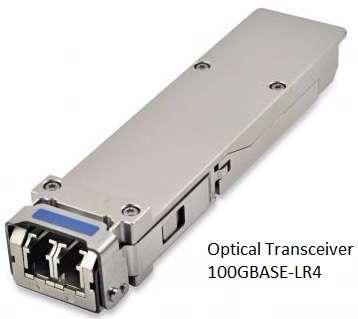
Similarly, the device that transmits and receives optical signals is known as an Optical Transceiver. Both ends of a fiber optic network will have one transceiver each to complete the chain. This is because each optical transceiver is composed of one transmitter and one receiver.
The figure above depicts an Optical Transceiver from Finisar Corporation. It boasts the following technical features:
- It supports a bit rate of approximately 100 Gbps.
- It has a power dissipation of less than 5 Watts.
- It is used for 100 Gigabit Ethernet interfaces over a single-mode fiber cable.
- It supports a maximum length of about 10 Km over single-mode fiber (SMF).
- It has 4 x 25 G electrical interfaces.
- It supports a 4 x 25Gbps LAN-WDM Transmitter.
Advertisement


