
What is IoMT (Internet of Medical Things) : Advantages and Disadvantages
By RF Wireless Expert Team
Advertisement
The Internet of Medical Things (IoMT) refers to interconnected medical devices, sensors, software, and healthcare systems that collect and exchange patient data over networks. It improves remote monitoring, diagnostics, and healthcare delivery. Advantages include better patient outcomes and real-time monitoring, while disadvantages include cybersecurity risks and privacy concerns.
Key features of IoMT
- IoT (Internet of Things): Refers to a network comprised of physical objects that collect and share electronic information using the internet.
- IoMT (Internet of Medical Things): Refers to a connected system of medical devices and software applications that leverage the internet. It utilizes data analysis for both clinicians and patients.
- IoMT, combined with Augmented Reality (AR), Virtual Reality (VR), Artificial Intelligence (AI), Blockchain, and sensors, is poised to shape the future of healthcare significantly.
- The IoMT technology enables continuous monitoring of vital signs such as ECG, heart rate, blood sugar level, body temperature, respiration rate, and activity level.
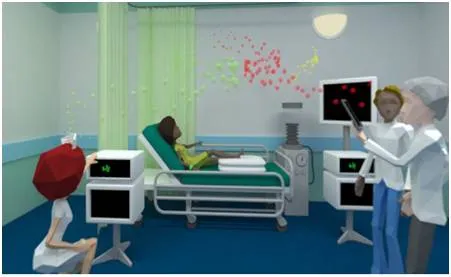
Image Courtesy: Aruba, a Hewlett Packard Enterprise company
IoMT Solutions for Healthcare
- Clinical Care: Includes smart beds, smart rooms, scanners, remote medical care, asset management, and more. These components are interconnected using technologies like Bluetooth and Wi-Fi.
- Personal Healthcare: Consists of smart pill boxes, electronic pills (or smart pills), etc.
Benefits or Advantages of IoMT
- Affordable Treatment: Patients gain access to new treatment facilities using better healthcare devices and medicines at an affordable cost, lowering overall expenses.
- Improved Treatment Results: IoMT offers the potential for better treatment outcomes.
- Increased Trust in Doctors: IoMT technologies can enhance the capabilities of doctors and researchers, fostering greater trust.
- Reduced Errors: Mistakes can be significantly reduced with the assistance of IoMT.
- Monitored Medication Intake: The intake of medicines can be monitored and controlled more effectively.
- Easy Maintenance: The use of medical devices within an IoMT network is easier to maintain.
- Better Disease Control: IoMT facilitates better control over diseases through constant monitoring and data analysis.
- Remote Patient Tracking: Hospitals can track patients and treatments by accessing data via apps installed on their smartphones from connected devices like glucose meters and heart rate monitors.
Drawbacks or Disadvantages of IoMT
- Security Risks: Wireless medical devices introduce potential security vulnerabilities.
- Interoperability Issues: Connecting devices from different vendors presents a significant challenge during IoMT system implementation.
- Software Implementation: Sophisticated medical analytic schemes require robust software implementation.
- Training Requirements: Doctors need training to use the IoMT apps and systems effectively.
Summary
IoMT connects healthcare devices and systems for smarter patient care. Advantages include remote monitoring and improved efficiency, while disadvantages include security vulnerabilities and data privacy challenges.
Real-World IoT Applications & Systems
- Top 10 Applications of IoT
- IoT Based Smart City Architecture
- IoT Based Healthcare System Architecture
- IoT Weather Monitoring System Architecture
- IoT Smart Retail System Architecture
- IoT Air Pollution Monitoring System Architecture
- IoT Based Intelligent Traffic System
- IoT Environmental Monitoring System
- IoT Elderly Fall Detection System
- IoT Perishable Food Delivery System
- IoT Radiation Monitoring System
- IoT Smart Driver Assistance System
- IoT Water Quality Monitoring System
- IoT in Manufacturing
- Smart Lavatory IoT: Aircraft Cleanliness Monitoring
- Satellite IoT Network Architecture
- Cellular IoT Overview
Continue Learning IoT Basics, Architecture & Tutorials
- IoT Tutorial: Basics, Architecture & Protocol Stack
- Understanding IoT Architecture: Levels 1 to 5
- IoT Stack vs Web Stack
- Advantages, Disadvantages, and Applications of IoT
- Ambient IoT : Advantages & Disadvantages of A-IoT
- Physical Layer Security for IoT Networks in 6G
- IoT Wireless Technologies and Standards