
Classification of IoT Devices: Types and Categories (Class 0, 1, 2)
Advertisement
Introduction
IoT devices can be classified into various categories based on their applications, such as wearables, smart home devices, and industrial IoT systems. These devices serve diverse purposes, from health monitoring to automating industrial processes. Understanding these classifications helps in designing tailored IoT solutions.
This article breaks down the types and categories of IoT devices such as class 0, class 1 and class 2, highlighting their unique applications. As we know, the Internet of Things provides features which make it possible for people and things to communicate via the internet. They communicate and reach the internet for data storage and applications using various wireless or wired infrastructures.
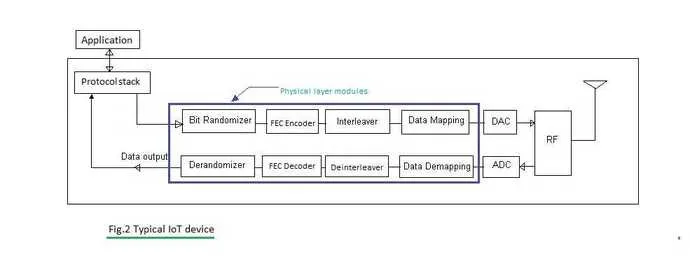 Figure-1 depicts internal blocks of a typical IoT device.
IoT devices are classified into two classes based on capability and ability to communicate.
-
The first class of IoT devices handle the sensors/transducers. They do not communicate with the server directly. Data from these IoT devices can be transmitted to a server using gateway devices. Typically they use Zigbee, NFC, Bluetooth and RFID standards for communication. These class of devices are battery operated and portable. Hence they require low power wireless technologies as mentioned above. They take care of single sensors and handle data volumes of smaller sizes.
-
The second class of IoT devices directly communicate to central servers for data storage. It supports the IPv6 protocol. This class of devices uses powerful processors and are not constrained by battery power. They also support gateway functionalities, wherein they support different types of communication ports such as DSL, FTTH, WiFi etc. They support multiple sensor devices.
IoT devices are further classified based on their functionalities into constrained devices and unconstrained devices. Constrained devices usually will have restrictions on memory and power supply needs. They are further categorized into class 0, class 1 and class 2 as mentioned in Table 1 below.
Classes of Constrained IoT Devices - Class 0, Class 1, Class 2
| Class | RAM | Flash | Description |
|---|---|---|---|
| Class 0 | < 1 KB | < 100 KB | Use a Gateway for basic communication needs. |
| Class 1 | Approx. 10 KB | Approx. 100 KB | Use a protocol stack as per IoT devices using CoAP. Interact with other devices without the need of a gateway. |
| Class 2 | Approx. 50 KB | Approx. 250 KB | These devices support regular IPV4 and IPv6 protocols. They function similarly to other network devices. |
Conclusion
Classifying IoT devices based on their types and categories provides a better understanding of their applications. Whether for personal, industrial, or commercial use, IoT devices are reshaping industries. Knowing their classification ensures better integration and utilization of IoT technology.
Continue Learning IoT Basics, Architecture & Tutorials
- IoT Tutorial: Basics, Architecture & Protocol Stack
- Understanding IoT Architecture: Levels 1 to 5
- IoT Stack vs Web Stack
- Advantages, Disadvantages, and Applications of IoT
- Ambient IoT : Advantages & Disadvantages of A-IoT
- Physical Layer Security for IoT Networks in 6G
- IoT Wireless Technologies and Standards
Hardware: IoT Sensors, Actuators & SoCs
- Understanding IoT Sensors
- Understanding IoT System-on-Chip (SoC) - RS9113
- Actuator Types: IoT Guide
- Soft Actuators in IoT
- IoT Antenna Types
Real-World IoT Applications & Systems
- Top 10 Applications of IoT
- IoT Based Smart City Architecture
- IoT Based Healthcare System Architecture
- IoT Weather Monitoring System Architecture
- IoT Smart Retail System Architecture
- IoT Air Pollution Monitoring System Architecture
- IoT Based Intelligent Traffic System
- IoT Environmental Monitoring System
- IoT Elderly Fall Detection System
- IoT Perishable Food Delivery System
- IoT Radiation Monitoring System
- IoT Smart Driver Assistance System
- IoT Water Quality Monitoring System
- IoT in Manufacturing
- Smart Lavatory IoT: Aircraft Cleanliness Monitoring
- Satellite IoT Network Architecture
- Cellular IoT Overview