
ECL vs LVDS vs CML: A Comparative Analysis
Explore the key differences between ECL, LVDS, and CML interfaces. Learn about their characteristics, advantages, and disadvantages for high-speed data transmission.
Advertisement
Trace every article connected to this tag across guides, explainers, and practical RF topics. This view is especially useful when the same concept spans multiple categories.
Articles
8
Showing
1-8
Pages
1/1
Where this tag appears most
Open the categories where this topic shows up most often.
Advertisement
Tagged Articles
Showing 1-8 of 8 articles tagged with Ecl.
Explore the key differences between ECL, LVDS, and CML interfaces. Learn about their characteristics, advantages, and disadvantages for high-speed data transmission.
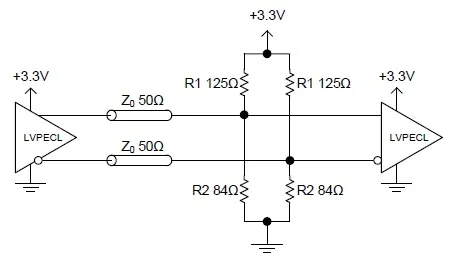
Explore the differences between ECL, PECL, and LVPECL logic families, covering their characteristics, advantages, and disadvantages for high-speed applications.
Explore why Emitter-Coupled Logic (ECL) stands out as the fastest logic family. Discover its differential signaling, current mode operation, and limited voltage swing advantages.
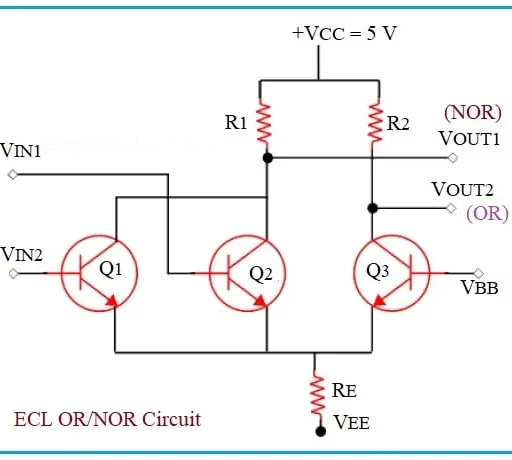
Explore Emitter Coupled Logic (ECL) circuits: their key characteristics, implementation using bipolar junction transistors (BJTs), and examples of ECL inverter, NAND, and NOR gates.
Explore the pros and cons of TTL (Transistor-Transistor Logic) compared to CMOS and ECL, covering speed, power, noise immunity, and more.
Compare TTL, CMOS, and ECL logic families based on parameters like fan-out, power consumption, noise immunity, and propagation delay in IC designs.
Explore advantages and disadvantages of CMOS logic family with comparison over TTL and ECL in terms of power, speed and noise immunity.
Explore advantages and disadvantages of Emitter Coupled Logic (ECL), highlighting its speed, noise immunity, and power consumption compared to TTL and CMOS.
Advertisement