
IoT Core Basics: An Introduction to Windows 10 IoT Core
By RF Wireless Expert Team
Advertisement
This tutorial covers the basics of IoT (Internet of Things), including key components and features.
Introduction to IoT
IoT, or the Internet of Things, refers to the network of physical devices connected via the internet, enabling them to send and receive data, utilize cloud storage, and more. Microsoft is leveraging the power of IoT alongside its Windows operating system to incorporate monitoring, control, and communication functionalities into a wide range of applications and devices.
Microsoft Windows 10 IoT comes in different versions:
- Windows 10 IoT Core: 256 MB RAM, 2GB Storage, X86 or ARM processor
- Windows 10 IoT for mobile: 512MB RAM, 4GB Storage, ARM processor
- Windows 10 IoT for industry devices: 1GB RAM, 16GB storage, X86 processor
Features of Windows 10 IoT Core
Windows IoT Core offers a range of features that make it suitable for IoT development:
- PowerShell: Allows users to run Windows commands for system management and automation.
- Remote Access: Enables users to access and control the IoT device remotely.
- Development Environment: Supports Microsoft Visual Studio IDE for application development.
- Programming Languages: Compatible with languages like C#, PHP, and Python.
- Microsoft Azure Integration: Provides access to Microsoft Azure, a cloud computing platform, for data storage, analytics, and other cloud services.
- Direct Device Communication: The framework allows devices to communicate directly without requiring an intermediary server.
- Device Compatibility: Windows 10 IoT Core can be ported to various devices, with the Raspberry Pi 2 board being a popular choice.
- USB Device Support: Supports standard USB devices such as USB keyboards, mice, USB hubs, and flash drives.
Continue Learning IoT Basics, Architecture & Tutorials
- IoT Tutorial: Basics, Architecture & Protocol Stack
- Understanding IoT Architecture: Levels 1 to 5
- IoT Stack vs Web Stack
- Advantages, Disadvantages, and Applications of IoT
- Ambient IoT : Advantages & Disadvantages of A-IoT
- Physical Layer Security for IoT Networks in 6G
- IoT Wireless Technologies and Standards
Hardware: IoT Sensors, Actuators & SoCs
- Understanding IoT Sensors
- Understanding IoT System-on-Chip (SoC) - RS9113
- Classification of IoT Devices
- Actuator Types: IoT Guide
- Soft Actuators in IoT
- IoT Antenna Types
Real-World IoT Applications & Systems
- Top 10 Applications of IoT
- IoT Based Smart City Architecture
- IoT Based Healthcare System Architecture
- IoT Weather Monitoring System Architecture
- IoT Smart Retail System Architecture
- IoT Air Pollution Monitoring System Architecture
- IoT Based Intelligent Traffic System
- IoT in Manufacturing
- Smart Lavatory IoT: Aircraft Cleanliness Monitoring
- Satellite IoT Network Architecture
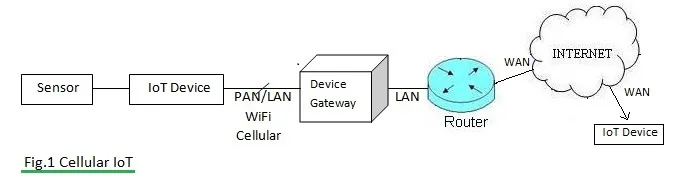
- Cellular IoT Overview