Quantum Key Distribution (QKD) Over Fiber: Enhancing Secure Communication Networks
Explore how Quantum Key Distribution (QKD) over fiber uses quantum mechanics for secure key exchange, offering enhanced security in finance, defense, and government.
Advertisement
Browse the full Articles archive with practical articles, guides, and reference material from RF Wireless World.
Articles
453
Showing
76-100
Pages
4/19
Popular subtopics
Jump across related topic clusters without losing your place.
Advertisement
Article Index
Showing 76-100 of 453 articles in this archive.
Explore how Quantum Key Distribution (QKD) over fiber uses quantum mechanics for secure key exchange, offering enhanced security in finance, defense, and government.
Explore the workings of Quantum Integrated Circuits (QICs), their applications, and transformative impact on industries from cryptography to AI. QICs enable unprecedented computational power & secure communication.

Explore the TCP/IP packet structure, including Ethernet, IP and TCP header fields with example.
Explore chip backdoors: hidden functionalities in microchips, their benefits in debugging, and the security risks of unauthorized access and data breaches.
Quantum sensing uses quantum systems for precise measurements, improving sensitivity, accuracy, and resolution in diverse fields like navigation and healthcare.
Explore the advantages and disadvantages of Mioty technology, a Low Power Wide Area Network (LPWAN) solution for IoT, focusing on its scalability, reliability, and limitations.

Explore location-based services (LBS) applications, advantages, and disadvantages. Learn about positioning technologies like GPS, Wi-Fi, BLE, and cellular triangulation.
Explore cloud telephony: its components like virtual PBX and VoIP, benefits such as cost-efficiency and scalability, and how it revolutionizes modern business communication.
Understand working of counter drone technologies and compare benefits and limitations of each including radar,EO/IR,Acoustic,RF detection & jamming, GPS Spoofing, drone nets/net guns, high power microwave and laser weapons etc.
Explore Mobileye's collision avoidance system: computer vision, object detection, and autonomous driving integration. Learn about its benefits and comparison with LIDAR technology.

Explore GNSS data processing within 5G mobile phones, covering GNSS architecture, signal processing steps, and key components. The article also outlines the GNSS architecture typically found in these devices.
A list of LoRaWAN network service providers operating in India, including contact information and operating frequencies.
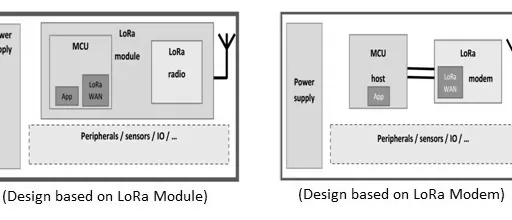
Explore LoRaWAN sensor design, including key components like power supply, MCU, LoRa radio, and peripherals. Discover prominent vendors and manufacturers.

Learn LoRaWAN-Satellite integration including its architecture components,functional working, benefits and implementation challenges.Explore popular vendors and manufacturers supplying LoRaWAN chipsets and equipments.

Discover how LiDAR enables precise target detection and detailed 3D mapping. Explore dToF principles, point cloud generation and the future of 3D imaging.
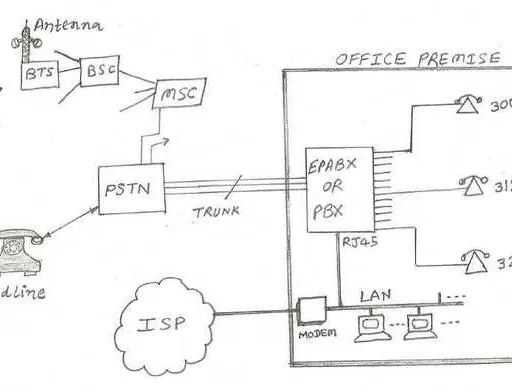
Explore telephone systems (PBX) for small offices, including key components, features like voicemail and auto-attendant, benefits for improved communication, and integration capabilities.
Explore the 5G QoS identifier (5QI) values, meanings, and their mapping to QoS parameters in 5G NR networks for efficient resource allocation.

Explore the Indian Regional Navigation Satellite System (IRNSS), India's independent GPS, including its features, network, and diverse applications.

Comparison of ng-eNB and gNB base station types in 5G NG-RAN, highlighting their roles in connecting UEs to the 5G core network.
Explore the 5G NR Zadoff-Chu sequence, its unique properties, applications in random access preambles, and MATLAB simulation resources.

Explanation of the 5G NR uplink timing control procedure, timing advance, and related messages for synchronization between UE and gNB.

Understand the 5G NR uplink power control procedure for PUSCH, PUCCH, SRS, and PRACH channels. Learn about open loop, closed loop control, and relevant information elements.

Understand 5G NR UE power classes (1, 2, 3, 4) with EIRP and output power limits for user equipment based on 3GPP standards.
An overview of User Equipment (UE) identities used in 5G New Radio (NR) networks, covering IMSI, IMEI, SUPI/SUCI, GUTI/S-TMSI, RNTI and I-RNTI.

Learn about 5G NR Uplink Control Information (UCI), including PUCCH formats for carrying various UCI payload sizes in 5G NR uplink.
Advertisement