
Bluetooth Smart Medical Devices to Reach 4.7 Million Users by 2016
IMS Research projected 4.7 million users for Bluetooth Smart medical devices by 2016, with 35% integration in wireless medical devices due to smartphone demand.
Advertisement
Trace every article connected to this tag across guides, explainers, and practical RF topics. This view is especially useful when the same concept spans multiple categories.
Articles
75
Showing
1-25
Pages
1/3
Where this tag appears most
Open the categories where this topic shows up most often.
Advertisement
Tagged Articles
Showing 1-25 of 75 articles tagged with Bluetooth.
IMS Research projected 4.7 million users for Bluetooth Smart medical devices by 2016, with 35% integration in wireless medical devices due to smartphone demand.
Explore 10 Bluetooth interview questions and answers which will help interviewee pass the job interview for Bluetooth Engineer positions related to its technology and applications.
Learn 7 Bluetooth Low Energy (BLE) advertising event types and their functions.
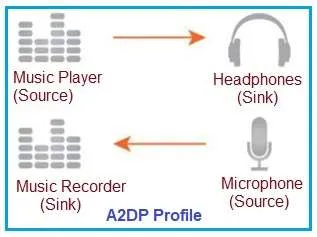
Clarifying the difference between A2DP and aptX: A2DP is a Bluetooth profile for audio streaming, while aptX is an audio codec enhancing audio quality within A2DP.
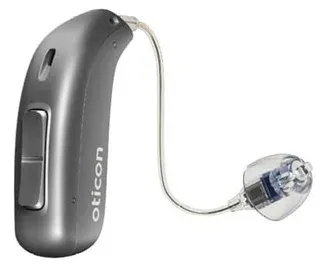
Explore the advantages and disadvantages of AI hearing aids, including adaptive sound processing, personalization, and potential drawbacks like cost and complexity.
A comparison of ANT and BLE technologies, highlighting their similarities and key differences in range, power consumption, topology, and applications.
Explore BLE frequency, range, data rate and power consumption as defined in Bluetooth Low Energy (BLE) specifications.
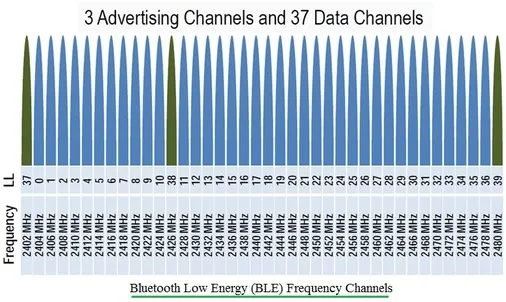
Learn about BLE advertising and data channels, their frequency values, and how they facilitate communication between Bluetooth Low Energy devices.
Explore the differences between Bluetooth Low Energy (BLE) audio and USB audio. Understand their features, pros, and cons to choose the best option.
Explore BLE Bonding usage, its benefits and differences with pairing as per Bluetooth Low Energy standard specification.
Learn Broadcaster, Peripheral, Observer and Central role of BLE devices as defined in Bluetooth Low Energy Standard and explore key differences between them.
Explore BLE Channel hopping and its benefits and usage in Bluetooth Low Energy standard specification.
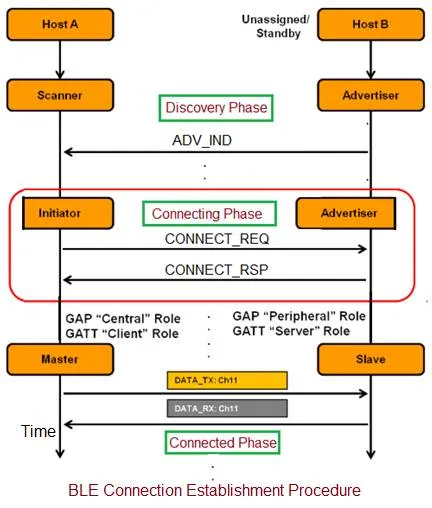
Understand the BLE connection process: discovery, connecting (CONNECT_REQ), and connected phases. Learn about master/slave roles, connection intervals, and key BLE states.
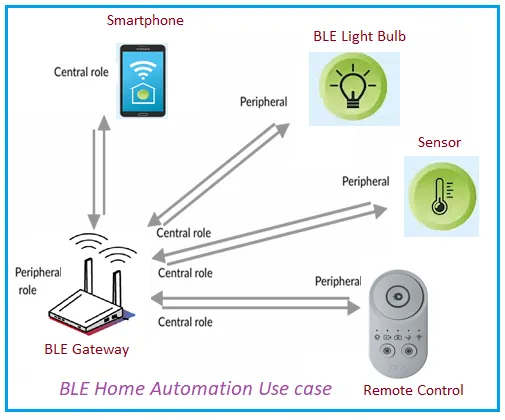
BLE Home Automation case study and its GATT design exercise using architecture and components such as bulb, sensor, gateway, remote control and smartphone.
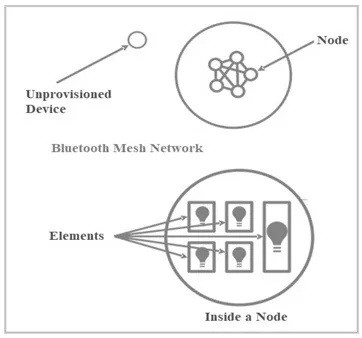
Explore BLE mesh architecture: node roles, routing, and configuration for robust IoT solutions with extended range and reliable connectivity.
Explore BLE security keys viz. TK, STK, LTK, CSRK and IRK and key differences between them as per BLE specification.
Explore BLE Link Layer States viz. advertising, scanning and connected. Learn key functions and activities of these Bluetooth Low Energy states.
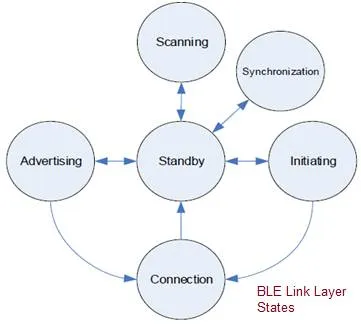
Explore the different states of BLE (Bluetooth Low Energy) devices, including Standby, Advertising, Scanning, Initiating, Connection, and Synchronization.
Explore the differences between Bluetooth 5 and 5.1, focusing on new features like direction finding (AoA/AoD) and improvements in GATT caching.
Explore the key differences between Bluetooth 5.0 and 4.2, including speed, range, power consumption, and suitability for IoT devices. A detailed comparison of the latest Bluetooth iterations.
Explore the differences between Bluetooth 5.3 and WiFi, including range, speed, power consumption, and applications, to help you understand their unique strengths.
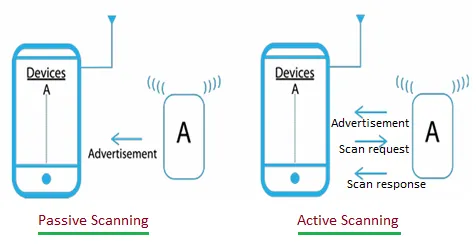
Compare Bluetooth active vs passive scanning and explore difference between active and passive scanning types.
Learn Bluetooth address types and subtypes viz. public and random (static and private sub-type) including their usage.
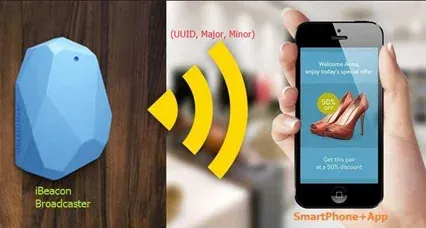
Explore 5 key advantages and disadvantages of Bluetooth beacon including its working and application as indoor positioning method.
Explore the Bluetooth frequency range, channel allocations, and the importance of channel selection for optimal performance and minimal interference.
Advertisement