
What is Tri-Netra Technology: Advantages and Disadvantages
Advertisement
Tri-Netra Technology is an advanced surveillance and security solution that combines intelligent imaging, analytics and communication technologies to improve monitoring and threat detection. Its advantages include enhanced situational awareness, real-time surveillance, and improved security management, whereas its disadvantages include higher deployment costs, privacy concerns, and infrastructure complexity.
Tri-Netra Technology : Key features and working operation
Tri-Netra, short for Terrain Imaging for Drivers Infrared, Enhanced, Optical, and Radar Assisted, is an indigenous technology developed by Indian Railways. It operates on a principle similar to that used by bats and whales to navigate and locate objects in their path.
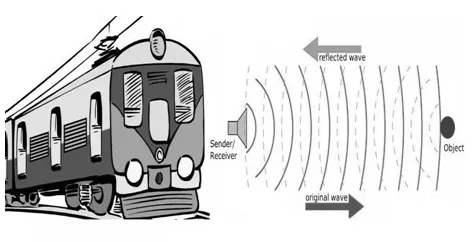
Bats emit ultrasonic waves that reflect off objects in their surroundings. By analyzing these reflected waves, they can determine the location and characteristics of obstacles. Tri-Netra employs a similar concept.
As a reminder, ultrasonic waves (ultrasound) are electromagnetic waves with frequencies exceeding 20 KHz, which is beyond the audible range of humans (20 Hz to 20 KHz).
Let’s examine how this technology is implemented by Indian Railways.
Working Operation of Tri-Netra Technology
The Tri-Netra system consists of:
- Infrared Cameras
- Optical Cameras
- Radar Assisted Imaging System
These components are installed at the front of the train engine. The Tri-Netra transmitter continuously emits ultrasonic waves. When these waves encounter an obstruction on the track, they are reflected back.
The radar system in the engine analyzes these reflected waves. This allows the loco pilot to apply the brakes in advance if an animal or other object is detected on the track. The system provides advance warning, even when the train is a few kilometers away from the obstruction.
Furthermore, the cameras capture images of the objects when the train is within a few meters, providing visual confirmation and alerting the loco pilots.
Benefits or Advantages of Tri-Netra Technology
- Obstruction Detection in Adverse Weather: It aids in detecting obstructions even in poor weather conditions, such as fog.
- Revenue Protection: By enabling trains to run in foggy conditions, it helps railways avoid revenue losses.
- Human-Friendly: The use of ultrasound ensures the system doesn’t disturb people, as the frequencies are outside the audible range.
- Immunity to Light Interference: Ultrasound frequencies are not affected by direct sunlight, fluorescent lights, or other light sources that can interfere with infrared devices.
- Cost-Effective: The system is relatively inexpensive, making it feasible to deploy across a large number of trains without significant expenditure.
Drawbacks or Disadvantages of Tri-Netra Technology
- Limited Range: Ultrasonic sensors have a maximum detection range of about 20 meters. Object detection also depends on the shape, size, and orientation of the object.
- Challenges with Soft Objects: Soft objects are not easily detected by ultrasonic waves.
- Real-World Testing Required: The accuracy and range of object detection can only be accurately determined through thorough testing under real-time conditions.
Summary
Tri-Netra Technology strengthens modern surveillance by integrating intelligent monitoring, rapid threat detection, and centralized security management for defense, transportation, and critical infrastructure. Its security advantages improve operational awareness and response capabilities, although deployment investment, privacy protection, and system maintenance remain important implementation considerations.