
What is Multi-Touch Technology : Advantages and disadvantages
Advertisement
Multi-touch technology allows a touchscreen to detect and respond to multiple touch points simultaneously. It enables intuitive gestures such as zooming, rotating, and swiping, improving user interaction across smartphones, tablets, kiosks, and interactive displays. Drawbacks include higher implementation costs, accidental touches, and sensitivity to environmental conditions.
Introduction to Multi-Touch Technology
The transition from single-touch interfaces (like ATMs) to multi-touch devices (smartphones) has been a significant digital trend. Actions like selecting icons, typing, or zooming with two fingers are now commonplace, a far cry from the traditional keypad phone.
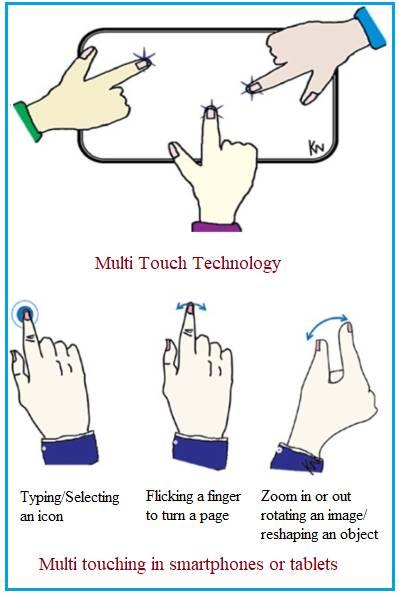
Classical touch screens had two primary limitations: they only allowed a single user at a time, and the cost increased significantly with screen size. The need for more flexibility and expanded command inputs led to the invention of multi-touch screens.
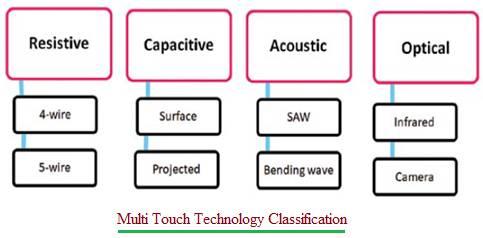
Classification of Multi-Touch Technology
Here are some of the main types of multi-touch technology:
- Capacitive
- Resistive
- Acoustic
- Optical
- IR (Infrared)
Multi-touch technology finds applications in diverse environments such as public spaces (walls of wonder), museums, schools, hotels, hospitals, and conference rooms. It’s used across consumer electronics, retail, government, transportation, gaming, industrial, commercial, hospitality, medical, military, and training sectors.
Benefits or advantages of Multi-Touch Technology
- Replaces Keyboard and Mouse: Multi-touch has largely replaced keyboards and mice for interacting with smartphones and tablets.
- Intuitive Graphical Control: Users can control graphical applications using multiple fingers.
- Multi-User Interaction: Multiple users can interact with computer applications simultaneously using various finger gestures on a surface without interfering with each other.
- Enhanced Durability: Multi-touch screens are generally stronger than single or dual-touch devices.
- Improved Customer Experience: It enhances customer experiences and allows businesses to make more informed decisions.
Drawbacks or disadvantages of Multi-Touch Technology
- Higher Cost: These systems can be expensive because the technology must support several concurrent contact points and accurately sense each touch.
- Difficult Small Item Selection: Selecting small items on the screen can be challenging.
- Larger Screen Requirement: Multi-touch technology often requires a larger screen to function effectively. The finger isn’t transparent, and smaller screens can obscure what’s being pointed at.
- Constant Visual Attention: Touchscreen interfaces demand constant visual attention. You can’t type without looking at the screen.
- Proximity Requirement: Users need to be in close proximity to use multi-touch devices.
Summary
Multi-touch technology delivers intuitive and responsive user experiences through gesture-based interaction. Discover the advantages and disadvantages of multi-touch systems, including improved usability, enhanced productivity, accidental touch issues, and implementation costs.
Advertisement


