
What is a LiPo Battery : Advantages and Disadvantages
Advertisement
Lithium Polymer (LiPo) batteries are rechargeable batteries known for their lightweight construction, flexible form factors, and high energy density. They are commonly used in drones, smartphones, wearable devices, and RC vehicles. Advantages include compact size and high discharge rates, while disadvantages include safety concerns and shorter lifespan under improper usage.
Key Features of LiPo Battery
A LiPo battery is a rechargeable battery that utilizes lithium-ion technology.
- These batteries consist of three key components: a positive electrode, a negative electrode, and an electrolyte (a liquid or gel-like chemical compound) situated between the electrodes.
- While Li-Ion batteries use a liquid electrolyte between the positive and negative electrodes, LiPo batteries use one of three forms: a dry solid, a porous chemical compound, or a gel-like electrolyte.
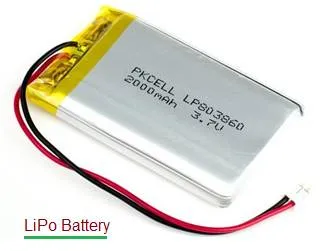
- LiPo batteries are available in various voltage ratings (e.g., 3.7V, 7.4V).
- Key specifications for LiPo batteries include voltage/cell count, capacity (mAh), and discharge rating (amperes).
- LiPo batteries are compatible with a range of connector types, including Traxxas, Deans, EC3, Tamiya, Venom, XT-60, Anderson Power Poles, JST-XH, and TP plugs.
Advantages of LiPo Batteries
Here are the benefits you can expect from LiPo batteries:
- High Specific Energy: Offers superior specific energy compared to other lithium battery types.
- Lightweight and Compact: Ideal for use in lightweight devices such as smartphones, thin laptops, and smart wearables due to their reduced weight and size.
- High Capacity: Able to hold more power due to their high capacity.
- Safer than Li-Ion: Less prone to explosion compared to Li-Ion batteries.
- Longer Lifespan: Doesn’t lose charging capacity as quickly as Li-Ion batteries, resulting in a longer lifespan (greater than 1000 cycles).
- Faster Charging: Boasts a very short charging time.
Disadvantages of LiPo Batteries
Here are the drawbacks associated with LiPo batteries:
- Limited Recharge Life: Supports a lower recharge life, typically around 300 to 400 cycles.
- Fire Hazard: Their chemistry can lead to fire if the battery is punctured.
- Requires Special Care: Demands specific handling during charging, discharging, and storage.
- Expensive: The cost is nearly double that of Li-Ion batteries.
Summary
LiPo batteries provide lightweight, high-performance energy storage for portable electronics. Advantages include flexibility and power density, while disadvantages include safety risks and charging sensitivity.
Battery Types & Technologies (Li-ion, LiPo, LiFePO4)
Explore the most common battery chemistries used in modern electronics, from consumer gadgets to electric vehicles.
- Lithium-Ion Batteries: Advantages & Disadvantages
- LiFePO4 vs Li-Ion Battery: Key Differences
- LiPo Battery: Advantages & Disadvantages
- Sodium-Ion Batteries Overview
- Sodium-Ion vs Lithium-Ion Batteries
- Lead Acid Batteries: Advantages & Disadvantages
- Tubular vs Flat Plate Battery
Advanced & Emerging Battery Tech
Discover the cutting edge innovations powering the future, including biodegradable materials, wearables and nuclear cells.
- Bio-Battery: Construction, Working, Advantages & Disadvantages
- Paper Battery: Construction, Working, Advantages & Disadvantages
- Iron-Air Batteries: Advantages & Disadvantages
- Nuclear Batteries: Advantages & Disadvantages
- Printed Batteries vs Conventional Batteries
- Flexible Batteries: Advantages & Disadvantages
- Wearable Battery: Advantages & Disadvantages