
What is Electronic Counter : Advantages and disadvantages
Advertisement
An electronic counter is a digital circuit that counts pulses, events, or clock cycles and displays the result in binary or decimal form. It is widely used in timers, frequency measurement, automation, and digital systems. Advantages include high counting accuracy and speed, while disadvantages include power dependency and design complexity for advanced applications.
Features & Types of Electronic Counter
We see many electronic devices that include electronic counters of various types. These devices are used in a wide range of applications including household uses, scientific research, to count stocks, perform calculations, and in weighing machines, among other things.
An electronic counter is a digital logic device that stores and displays the number of specific events. This is done continuously based on its configurations and software design.
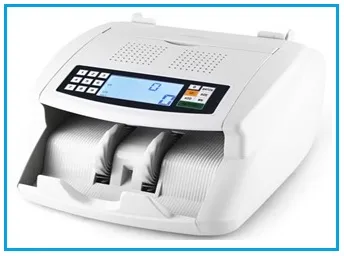 Electronic Counter
Electronic counters can be implemented using register type circuits, such as flip flops. They’re classified into different types, for example, synchronous, asynchronous, up/down counter, BCD counter, decade counter, ring, cascaded, Johnson, and modulus counters. Figure 1 shows a digital counting machine used for counting notes and for billing purposes.
Benefits or Advantages of Electronic Counters
Here are the benefits and advantages of using electronic counters:
- They are available in many mounting configurations.
- There’s a large demand for electronic counters for various applications, such as setting up AC timers, setting timers to take pictures with a camera, and as a clock divider.
- They’re available at low to medium cost, depending on their configurations and specifications.
- They are widely used in manufacturing for controlling batch sizes, punch/drill products, etc.
- They can be used for long durations with minimum maintenance.
- They offer digital readouts.
- They can be easily installed and are available in semi-automatic and automatic modes.
Drawbacks or Disadvantages of Electronic Counters
Here are the drawbacks and disadvantages of using electronic counters:
- There are chances of operational errors, which depend on the configurations of the electronic counter machine.
- Training is required to operate them efficiently, which increases costs related to training or hiring skilled professionals.
- They are medium to heavy in weight.
- There are specific disadvantages of electronic counters based on the digital counting principle used in the design, such as in Johnson counters, cascaded counters, synchronous or asynchronous counters, decade counters, and ring counters.
Summary
Electronic counters are essential digital circuits used for pulse and event counting. Advantages include precision and fast operation, while disadvantages include power requirements and increased complexity in sophisticated designs.