
Link Quality Indicator (LQI) in Wi-SUN
Explore the Link Quality Indicator (LQI) in Wi-SUN networks: its role in assessing link quality, adaptive routing, and ensuring reliable IoT communication.
Advertisement
Trace every article connected to this tag across guides, explainers, and practical RF topics. This view is especially useful when the same concept spans multiple categories.
Articles
9
Showing
1-9
Pages
1/1
Where this tag appears most
Open the categories where this topic shows up most often.
Advertisement
Tagged Articles
Showing 1-9 of 9 articles tagged with Wi Sun.
Explore the Link Quality Indicator (LQI) in Wi-SUN networks: its role in assessing link quality, adaptive routing, and ensuring reliable IoT communication.
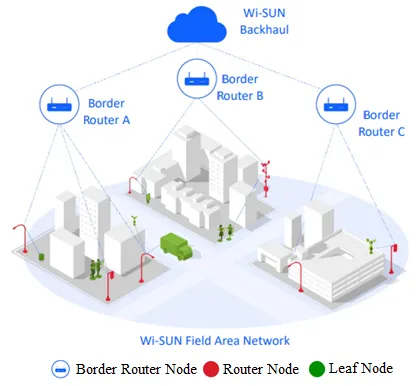
Explore the functions and working principles of a Wi-SUN border router within a Field Area Network (FAN). Learn about its role in providing WAN connectivity, node authentication, and network management.
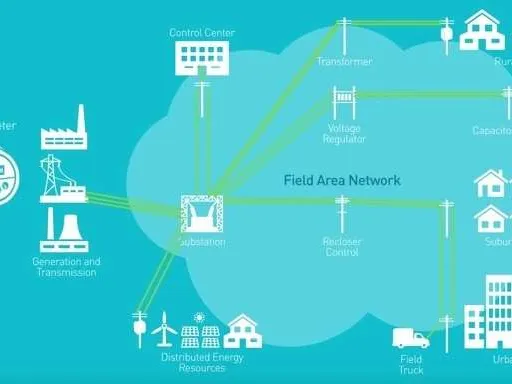
Wi-SUN is a secure, optimized mesh network promoted by the Wi-SUN Alliance for smart utility and smart city applications. It ensures interoperability between vendors using IEEE 802.15.4g.
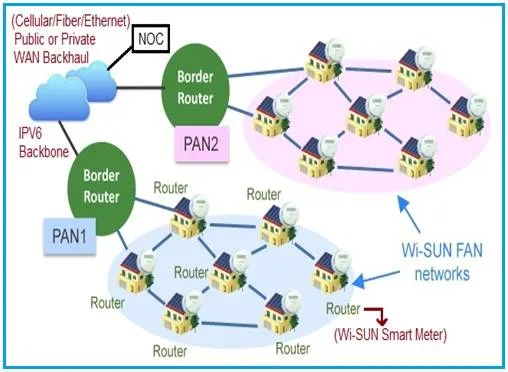
Explore the Wi-SUN FAN architecture, its features, and the advantages it offers for IoT applications, including smart cities and AMI metering.
Explore Wi-SUN frequency bands used globally, including USA, Canada, Australia, Japan, Europe, and India. Find key parameters and regulatory domains.
Explore Wi-SUN PHY modes, including symbol rates and modulation indices, as defined by IEEE 802.15.4g/u/v standards.
An overview of the Wi-SUN protocol stack layers, including the RF driver, PHY layer, and MAC layer, detailing their functions in Wi-SUN networks.
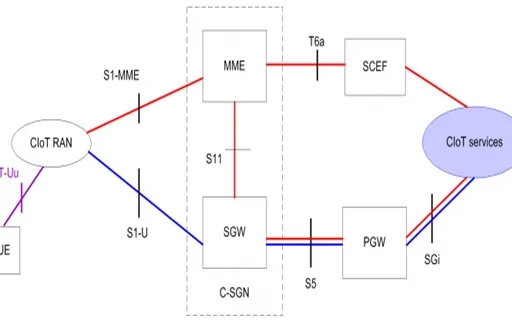
A comparison of Wi-SUN, LoRa, and NB-IoT technologies for IoT, covering their key differences in frequency, data rate, latency, and applications.
Explore the differences between Wi-SUN and WiFi technologies, including standards, data rates, coverage, and applications in smart homes and cities.
Advertisement