
What is a Dynamic Microphone : Advantages and Disadvantages
Advertisement
A dynamic microphone converts sound into electrical signals using electromagnetic induction between a diaphragm and a coil. It is widely used in live performances, broadcasting, and public address systems. Advantages include durability and resistance to high sound pressure levels, while disadvantages include lower sensitivity and reduced detail compared to condenser microphones.
Dynamic Microphone working & its construction
A dynamic microphone consists of a coil of thin wire wound on a cylindrical tube, which is attached to a light disc called the diaphragm. The coil and tube assembly are positioned along the axis of a permanent magnet. Due to its construction and working principle, it’s often referred to as a moving coil microphone. These microphones are popular as handheld microphones for singers and speakers where durability is a key requirement.
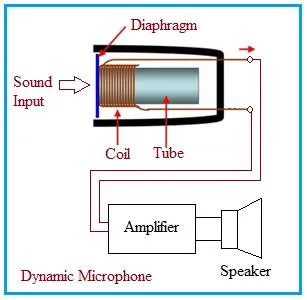
Figure-1 : Dynamic Microphone construction and working
When someone speaks into the diaphragm, the coil and tube assembly move in and out. This vibrational movement within the circular gap between the poles of the permanent magnet causes electromagnetic induction. This induction generates a small alternating current in the wire, resulting in an AC voltage across the coil. This voltage is then amplified using an amplifier and sent to a speaker to reproduce the amplified sound.
Advantages of Dynamic Microphones
Here are the key benefits of using a dynamic microphone (or moving coil microphone):
- Good Omnidirectional Properties: It’s a good quality microphone, often with omnidirectional characteristics.
- Affordable Cost: Dynamic microphones are generally available at an affordable price point.
- Rugged Construction: Being almost entirely mechanical, they are rugged and can withstand high sound pressure levels.
- No Power Required: They do not need any external battery or power source to operate.
- Full Audible Range: They can convert sound waves across the entire audible range into electric current (or voltage) for further processing.
- Durable: They are durable and can withstand significant volume levels.
- Sound Coloring: They tend to color the sound in the 5 to 10 KHz range, which can add clarity, presence, and understandability to vocals and instrument sounds.
Disadvantages of Dynamic Microphones
The following are the main drawbacks of dynamic microphones (or moving coil microphones):
- Poor High-Frequency Response: They often exhibit a poor high-frequency response due to the inertia of the coil, tube, and diaphragm, as well as the force needed to overcome the interaction between the coil and magnet. This makes them less suitable for recording instruments with higher frequencies and harmonics compared to condenser microphones.
- Misses Soft Sounds: This type of microphone might miss quieter sounds because it requires a certain amount of sound pressure to move the coil effectively.
- Not as Sensitive: They are not as accurate or sensitive as condenser microphones, making them less suitable for in-studio film productions or situations requiring high fidelity.
Summary
Dynamic microphones are rugged audio transducers suitable for live sound applications. Advantages include durability and reliability, while disadvantages include lower sensitivity and limited high-frequency response.