
What is Microphone & types : 5 Advantages and Disadvantages
Advertisement
A microphone is an input transducer that converts sound waves into electrical signals for recording, communication, broadcasting, and audio processing applications. It is an essential component of smartphones, computers, public address systems, and professional audio equipment. Advantages include real-time voice capture and versatility, while disadvantages include susceptibility to noise and signal distortion.
Microphone Structure
Introduction: A microphone is a device that converts sound energy into electrical energy, enabling its transmission through a medium. Essentially, it’s an instrument that transforms sound waves into electrical signals.
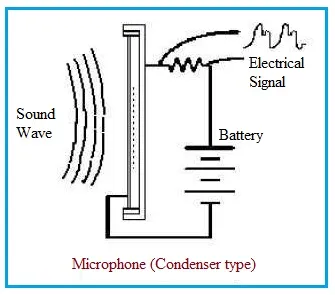 Image alt: microphone
The illustration above shows acoustic sound waves being input, with electrical signal waves being captured using two electrical wires.
Microphones are used to provide speech or other sounds for various applications, including voice recognition software.
Types of Microphones
Here are different types of microphones based on their construction and working principle:
-
Carbon Microphone: This type uses two metal plates separated by carbon granules. One plate acts as a diaphragm. When sound waves hit the diaphragm, it vibrates, creating variable pressure on the granules. This changes the electrical resistance between the plates, consequently varying the electric current.
-
Crystal Microphone: Here, variable pressure is generated by sound waves applied to a pair of surfaces on a quartz crystal, producing electrical signals.
-
Ribbon Microphone: This microphone operates based on Faraday’s law of electromagnetic induction. It’s also known as a moving coil microphone.
-
Wireless Microphone: Developed using Bluetooth technology, these microphones eliminate the need for connecting wires. They are plug-and-play devices, very convenient to use.
-
Condenser Microphone: These consist of two thin discs or plates forming a capacitor. One plate is flexible, while the other is rigid.
-
Electret Microphone: These operate on the same principle as condenser microphones, except their plates are made from a ferroelectric material that retains electrical charge. The term “electret” combines “Electrostatic” and “Magnet.”
Benefits or Advantages of Microphones
- Providing voice input using a microphone is faster than typing text using a keyboard.
- Sound waves can be manipulated in real time.
- Microphones can enhance the safety and security of drivers by integrating with voice activation systems (e.g., switching on the radio, using speakerphone).
- Generally, they are inexpensive.
- Most microphones can withstand extremely high sound pressure levels.
- Microphones are rugged in their construction.
- Most don’t require a power supply (except for some types). For example, dynamic microphones don’t need a battery.
- Condenser microphones are very sensitive and are preferred for vocal recordings.
Drawbacks or Disadvantages of Microphones
- Sound files require a large amount of memory for storage, processing, and use.
- Voice recognition software isn’t as accurate as manual typing. For example, it may not distinguish between “there” and “their.”
- Sound signals often need amplification for proper reconstruction, requiring amplifiers. For instance, dynamic microphones require preamplifiers.
- Performance can be reduced at high frequencies.
- Condenser microphones are very sensitive and can pick up unwanted background noise.
Summary
Microphones convert acoustic sound into electrical signals for communication and recording. Advantages include accurate audio capture and ease of use, while disadvantages include background noise sensitivity, feedback issues, and performance variations across environments.
Continue Learning Microphones: Types, Technology & Comparisons
Deep dives into the components that translate sound waves into electrical signals, covering everything from legacy carbon mics to modern MEMS technology used in smartphones.
- Microphone Basics and Types
- Microphone vs Loudspeaker
- Analog vs Digital Microphone Sensitivity
- MEMS Microphone Basics
- MEMS Microphone: Advantages and Disadvantages
- Condenser Microphones: Advantages and Disadvantages
- Dynamic Microphones: Advantages and Disadvantages
- Carbon Microphones: Advantages and Disadvantages