
What is SCDMA (Synchronous CDMA) in DOCSIS: Advantages and Disadvantages
Advertisement
SCDMA (Synchronous Code Division Multiple Access) is an upstream transmission technology used in DOCSIS cable networks to improve bandwidth utilization and resistance to interference. Its advantages include higher spectral efficiency and improved noise performance, whereas its disadvantages include greater implementation complexity and limited deployment in modern cable systems.
Key Features of SCDMA
CDMA stands for Code Division Multiple Access. In CDMA, the entire allocated bandwidth is shared among multiple subscribers or users by assigning unique codes. Essentially, all users utilize the entire bandwidth at the same frequency channel and at the same time.
The figure below illustrates the concept of CDMA, showing how different codes are assigned for various channels, such as traffic channels or control channels.
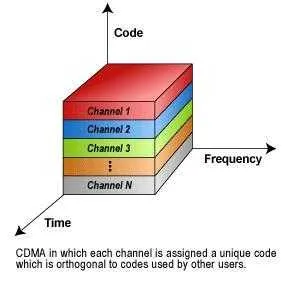
SCDMA, or Synchronous Code Division Multiple Access, was introduced in the DOCSIS 2.0 standard alongside ATDMA. SCDMA uses 128 orthogonal codes to transmit 128 symbols simultaneously, allowing multiple cable modems to transmit within the same time slot. Like ATDMA, SCDMA aims to increase the data throughput of the system.
Benefits or Advantages of SCDMA
- Burst Noise Immunity: SCDMA spreads transmissions over a longer time period, making it more resistant to burst noise compared to ATDMA.
- Reduced Errored Symbols: SCDMA utilizes a longer symbol time than ATDMA, which reduces the number of errored symbols.
- Byte Interleaving: Similar to byte interleaving in ATDMA, SCDMA employs framing and subframing. This spreads bytes across multiple Reed-Solomon code words, helping to combat burst and impulse noise.
Drawbacks or Disadvantages of SCDMA
- Interoperability Issues: Problems with interoperability have been observed between cable modems from different vendors.
- Throughput Dependency: SCDMA only provides noticeable throughput benefits when approximately 60% of the upstream traffic is actively utilizing the SCDMA scheme.
- Frequent Ranging: All cable modems require periodic ranging every second.
- Strict Time Alignment: To achieve higher throughput, all cable modems must be precisely time-aligned within a fraction of the symbol rate.
Summary
SCDMA improved upstream cable communication by increasing capacity and enhancing transmission reliability under noisy network conditions. Its technological advantages supported efficient DOCSIS deployments, although evolving broadband technologies have gradually reduced its widespread implementation.
Continue Learning DOCSIS Architecture & Fundamentals
- DOCSIS Architecture Explained
- DOCSIS RF Frequency Range and Bandwidth
- DOCSIS 3.0 vs 3.1 vs 4.0: Understanding the Differences
- DOCSIS 3.1 vs DOCSIS 4.0: Advantages and Benefits
Modulation & Channel Access in DOCSIS
Explore More TD-SCDMA Resources
- TD-SCDMA Physical Layer
- TD-SCDMA Frame & PHY Layer
- TD-SCDMA Conformance Testing
- TD-SCDMA Comparison with WCDMA