
What is Flexible PCB : Advantages and Disadvantages
Advertisement
A Flexible Printed Circuit Board (Flexible PCB) is a bendable electronic circuit built on flexible substrates such as polyimide. It is widely used in smartphones, aerospace, medical devices, and automotive electronics. Advantages include space savings and improved reliability, while disadvantages include higher manufacturing costs and repair difficulties.
Key features of Flexible PCB
- As the name suggests, a Flexible PCB can be bent, folded, and twisted, unlike its rigid counterpart.
- Electronic components are mounted on flexible plastic substrates like polyimide or transparent conductive polyester film.
- Manufacturing typically involves photolithographic techniques.
- Another method involves laminating thin copper strips between two layers of PET (Polyethylene terephthalate). These PET layers are approximately 0.05 mm thick and coated with an adhesive.
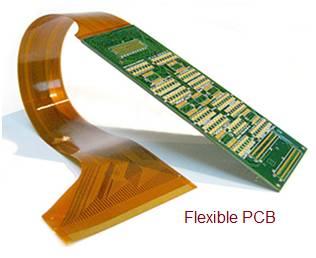
- Flexible PCBs are commonly found in space-constrained devices such as smartphones, tablets, laptops, cameras, and smart wearables like smart rings.
- Flexible PCBs (Printed Circuit Boards) are manufactured in various structure types:
- Single-sided
- Double-sided
- Multilayer
- Rigid-flex
- Polymer thick film
- The specifications for both rigid and flexible PCBs are defined in various IPC standards, including IPC-2221A, IPC-2223, IPC-4101, IPC-4202, IPC-4203, and IPC-4204.
Benefits or Advantages of Flexible PCBs
Here are some of the key advantages of using Flexible PCBs:
- The main benefit is their flexibility. They can be bent, shaped, folded, and twisted into various configurations that are impossible with rigid PCBs.
- They can eliminate the need for connectors, rigid circuit boards, and wire harnesses, simplifying designs.
- Flexible PCBs can be arranged in various stacked configurations, maximizing space utilization.
- Single-sided flexible PCB structures are particularly well-suited for applications requiring high flexibility.
- They are generally easy to install.
Drawbacks or Disadvantages of Flexible PCBs
Despite their advantages, Flexible PCBs also have some drawbacks:
- They can be more expensive than rigid PCBs in certain applications due to less efficient panel utilization during manufacturing.
- There’s a higher risk of damage during handling due to their flexible nature.
- The assembly process can be more complex compared to rigid PCBs.
- Repairing or reworking Flexible PCBs in case of faults or issues can be difficult.
Summary
Flexible PCBs provide compact and lightweight circuit solutions for advanced electronics. Advantages include flexibility and reduced wiring, while disadvantages include higher fabrication costs and maintenance challenges.
Advertisement


