
LTE Tracking Area Update (TAU) Procedure Explained
Advertisement
This document explains the Tracking Area Update (TAU) procedure used in LTE systems. TAU stands for Tracking Area Update. We’ll cover both scenarios: TAU without S-GW change and TAU with S-GW change.
A standalone TAU (tracking area update), whether it involves an S-GW change or not, occurs when a GPRS-attached UE or an E-UTRAN-attached UE experiences certain conditions. These conditions are detailed in section 5.3.3.0 of the 3GPP TS 23.401 document.
TAU Procedure without S-GW Change
The following diagram illustrates the message flow between E-UTRAN entities during a TAU procedure without a Serving Gateway (S-GW) change.
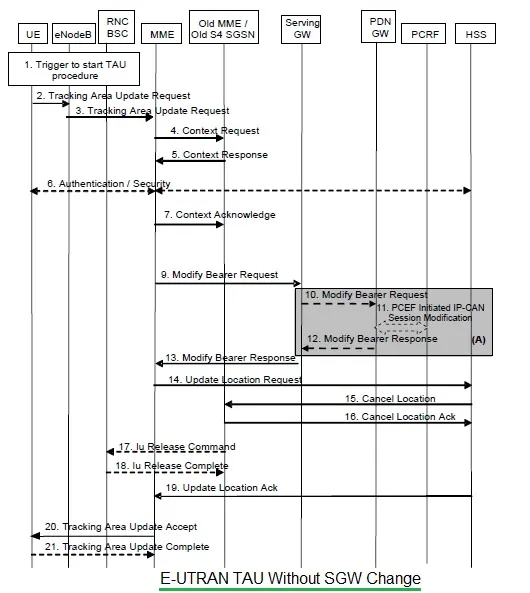
Figure 1: TAU Procedure without S-GW change
TAU Procedure with S-GW Change
Now, let’s look at the scenario where the TAU procedure does involve an S-GW change. The diagram below outlines the message flow between E-UTRAN entities in this case.
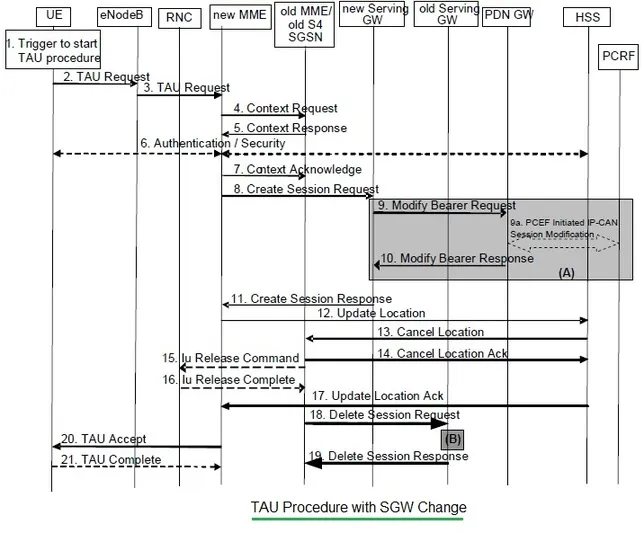
Figure 2: TAU Procedure with S-GW change
References
- 3GPP TS 23.401 version 11.3.0 Release 11
- 3GPP TS 24.301 V8.1.0
Continue Learning 4G LTE
- 4G LTE Basics Tutorial
- 4G LTE Architecture: Network Elements and Interfaces
- LTE Frame Structure
- LTE Channel Types: Logical, Transport and Physical Channels
- LTE Protocol Stack: User Plane vs. Control Plane
- 4G LTE Physical Layer & its modules
- LTE Frequency Bands: FDD, TDD and E-UTRA Bands
- LTE Carrier Aggregation & its benefits
- 4G LTE Network Security
- LTE Cell Search Procedure
- LTE UE Uplink Network Entry : Random Access Procedure
- LTE Paging Procedure Mechanism and Call Flow