
What is Light Sensor : 5 Advantages and Disadvantages
Advertisement
A light sensor detects the intensity or presence of light and converts it into electrical signals for monitoring and control applications. It is commonly used in smartphones, smart lighting systems, cameras, and industrial automation. Advantages include energy savings and automation capabilities, while disadvantages include sensitivity to environmental interference.
Features & types of light sensor
Light sensors are used in various applications, including:
- Automatic street light systems
- Automatic brightness control in mobile devices
- Security devices in homes and offices
- Measuring light seen by cameras
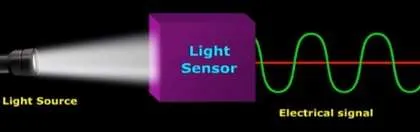
There are several types of light sensors, including photo conductive cells, photo voltaic cells, and photo junction devices (photo diodes, photo transistors). The most common light sensors are based on photo resistors, which control the flow of current using sensed light energy. These are known as Light Dependent Resistors (LDRs).
The advantages and disadvantages of light sensors depend on their construction method viz. photoresistor, photodiode, or phototransistor.
Advantages of Light Sensors
- Easy Integration: They are easy to integrate with lighting systems, such as automatic lighting.
- Energy Management: They facilitate energy consumption/management through automatic brightness control in mobile phones and automatic on/off switching of street lights based on ambient light intensity.
- Variety: LDR (photoresistor)-based light sensors are available in different shapes and sizes.
- Low Power Requirements: Light sensors require small voltages and power for operation.
- Photoresistors: Lower in cost, bi-directional, and offer moderate response time.
- Photodiodes: Offer quick response time, lower cost, and provide digital output.
- Phototransistors: Very fast and provide immediate output compared to photoresistors.
- High Current Generation: Phototransistors generate high current compared to photodiodes.
Disadvantages of Light Sensors
- LDR Inaccuracy: LDRs are highly inaccurate with a high response time (about 10s or 100s of milliseconds).
- Analog Resistance: The resistance varies continuously (analog) in photoresistors, and they can be rugged in nature.
- Photodiode Sensitivity: Photodiodes are temperature-sensitive and uni-directional, unlike photoresistors.
- Phototransistor Voltage Limit: Phototransistors cannot withstand voltages above 1000 volts.
- Phototransistor Vulnerability: Phototransistors are vulnerable to surges, spikes, and EM energy.
Summary
Light sensors enable automatic light detection and control in electronic systems. Advantages include energy efficiency and convenience, while disadvantages include calibration needs and ambient light sensitivity.