
What is Iridium Next: Features, Applications & Enhancements
Advertisement
Iridium NEXT is a next-generation satellite constellation developed to enhance global satellite communication services. The system provides worldwide voice, data, IoT connectivity, aviation tracking, maritime communication and emergency services through a network of low Earth orbit satellites offering improved coverage and network performance.
Introduction:
SpaceX has recently launched satellites as part of a contract with Iridium Communications to complete a new constellation of approximately 20 satellites. Further launches will bring the total to 75 satellites. Of these, 66 will be operational, with the remaining nine serving as spares.
Once these new satellites are in orbit alongside the existing ones, the new constellation will become operational, providing a seamless transition for customers from the aging Iridium constellation.
After the new constellation is fully operational, the original satellites will be de-orbited.
The Iridium Next project began in 2012 and is expected to be fully operational by 2025.
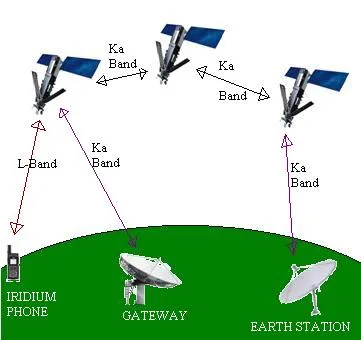
Key Features of Iridium Next System:
- 66 operational satellites in LEO (Low Earth Orbit) with 9 spares.
- Expanded capacity, high data speeds, and the ability to host payloads.
- 9 times improvement in throughput.
- 125 times improvement in memory capacity.
- High quality voice communication.
- Supports Internet, text messaging, and other data applications.
(Refer to Iridium Satellite System features for more details.)
Applications of Iridium Next System:
- High-speed and broadband services.
- M2M (Machine to Machine) and IoT (Internet of Things) applications.
- Use of internet and other services (voice, text, etc.) in maritime communications.
- Internet access in remote and inaccessible areas of the earth.
- Enhanced aircraft tracking: Aircraft can transmit their location directly to ground stations via onboard satellite transponders, improving airport communication and air traffic control.
- Extended satellite lifespan: The new satellites have a lifespan of about 20 years, compared to 7 to 9 years for the original constellation.
Continue Learning Satellite Communication Technology
- Satellite Communication Basics Tutorial
- GEO Vs. LEO Vs. MEO Satellite Types
- Apogee and Perigee in Satellite Communication
- Satellite Capacity Allocation Types
- Satellite Frequency Bands