
What is Green IT : Advantages and Disadvantages
Advertisement
Green IT is the practice of designing, managing, and operating information technology systems in an environmentally sustainable manner. It includes energy-efficient data centers, virtualization, and responsible electronics recycling. Advantages include reduced energy consumption and operating costs, while disadvantages include investment requirements and organizational change challenges.
Introduction: The rapid advancement of the electronics industry and the widespread adoption of wireless technologies have led to a surge in the use of IT devices like smartphones, tablets, laptops, and PCs. These devices have become essential in our daily lives. However, they consume significant amounts of power and impact our environment. Green IT, or Green Computing, aims to address these issues by minimizing energy consumption and creating more environmentally friendly devices.
Green IT Functions & its Components
Green IT seeks to reduce the carbon footprint generated by information systems while also saving money. It encompasses areas like carbon-free computing, solar computing, and quiet computing.
Key Functions of Green IT:
- Reducing energy consumption
- Minimizing the effects of global warming
- Reducing the use of natural resources
- Reducing the use of hazardous materials
- Recycling e-waste
- Promoting bio-degradability
- Virtualization
- Increased use of energy-efficient products
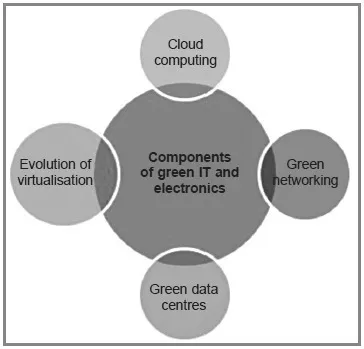
Figure 1: Green IT Components
The figure above illustrates key Green IT components, including:
-
Cloud Computing: Offers on-demand computing services, like applications, storage, and processing power over the internet, on a pay-as-you-go basis. For example, using a single system on the cloud with the installation of an OS as per need rather than buying multiple systems with different OSs.
-
Green Data Centers: Focus on minimizing carbon footprints, recycling e-waste, using appropriate building materials and paints with lower emissions, employing electric and hybrid vehicles, and utilizing evaporative cooling, photovoltaic technology, and heat pumps.
-
Green Networking: Involves using energy-efficient networking devices that minimize resource utilization. These devices employ energy-efficient communication strategies, such as using sleep mode in routers during low traffic hours.
-
Virtualization: Includes server virtualization, application virtualization, network virtualization, storage virtualization, and desktop virtualization. Virtualization allows multiple computer systems to run on a single set of physical hardware. For example, application virtualization enables applications to run independently of the underlying host OS. Storage virtualization combines multiple storage devices into one large storage device.
Advantages of Green IT
- Environmentally Friendly: Green IT techniques result in much lower carbon dioxide emissions.
- Reduced Power Consumption: Green IT solutions consume less power.
- Cost-Effective: Users pay only for what they use, leading to significant cost savings.
- Reduced Equipment Disposal: Green IT promotes reuse, recycling, and refurbishment, reducing the amount of e-waste.
- Reduced Travel: Telecommuting, facilitated by Green IT, reduces unnecessary travel, boosting profit margins.
- Sustainable Materials: Computers and peripherals are increasingly made using bamboo and recyclable plastics, minimizing environmental impact.
Disadvantages of Green IT
- High Startup Cost: Implementing Green IT solutions can involve high initial investments.
- Limited Availability: Affordable Green IT systems are not always readily available, often still in experimental stages.
- Performance Trade-offs: Sometimes, performance is sacrificed to improve battery life.
- Skills Gap: Green IT requires skilled human resources, which are currently lacking.
- Time to Success: Achieving the full potential of Green IT requires time and consistent effort.
Summary
Green IT helps organizations reduce the environmental footprint of technology operations. Advantages include cost savings and sustainability improvements, while disadvantages include implementation complexity and initial expenses.
Continue Learning Green Technologies
- Top 10 Applications of Green Technology
- Green Buildings : Advantages & Disadvantages
- Green Computing : Advantages & Disadvantages
- Green Hydrogen : Advantages & Disadvantages
- Green Mobility : Advantages & Disadvantages
- Green Technology : Advantages & Disadvantages
- Green Telecom Solutions : Advantages & Disadvantages
- Green-House Farming : Advantages & Disadvantages