
What is Photo Resistor Dark Resistance
Advertisement
Photo resistor dark resistance is the electrical resistance of a light dependent resistor (LDR) when no light is present. Dark resistance is typically very high and serves as an important parameter for evaluating sensor sensitivity, performance and suitability in light detection and control applications. This page describes photo resistor dark resistance definition and formula to calculate it.
What is a Photo Resistor?
A photo resistor is a device whose resistance decreases as the amount of light incident upon it increases. It’s also commonly known as an LDR (Light Dependent Resistor) or a photoconductor.
Essentially, when more light shines on its surface, the resistance drops, allowing current to flow more easily through the circuit.
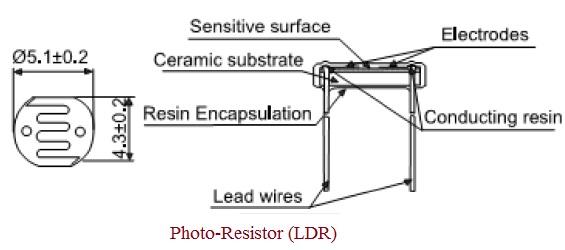
Figure 1: Typical components of a photo resistor.
What is Photo Resistor Dark Resistance?
Dark resistance refers to the resistance of a photo resistor when it’s kept in complete darkness.
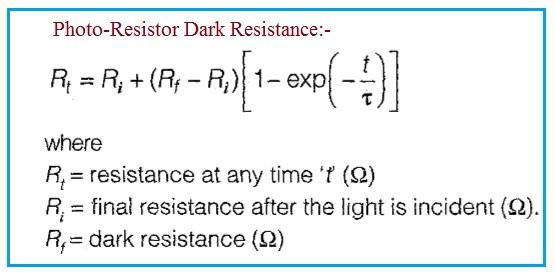
When there’s no light present, the resistance is at its highest.
Advertisement


