
What is Channel Bonding : Advantages and Disadvantages
Advertisement
Channel bonding is a technique that combines multiple communication channels to increase bandwidth and data throughput. It is widely used in Wi-Fi, cable broadband, and LTE networks. Advantages include higher speeds and improved network performance, while disadvantages include increased interference risks and greater hardware complexity.
About Channel Bonding
Channel bonding involves aggregating multiple internet connections to provide users with a faster internet experience. This can be achieved by combining connections from the same provider using the same technology, or from different providers using different technologies.
Essentially, channel bonding combines these multiple connections into a single, faster connection. It works by splitting web traffic at the packet level across the available connections. This is particularly useful for tasks like streaming large movie files.
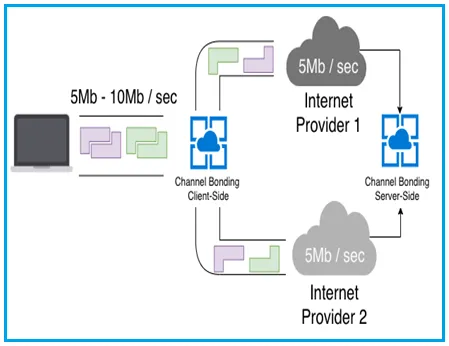 Image courtesy: www.makeuseof.com
Channel bonding hardware and software are responsible for splitting and combining the internet traffic as needed. This functionality is implemented on both the client and server sides.
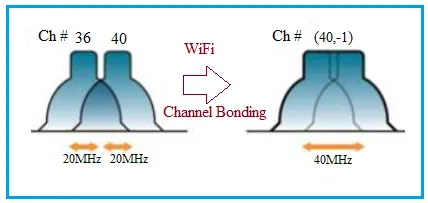
Example #1: Imagine three non-overlapping 802.11n Wi-Fi channels operating in the 2.4 GHz band. These can be combined to provide a theoretical speed of 54 Mbps. This is a common example of Wi-Fi channel bonding. The graphic shows two 20 MHz channels combined to create a single 40 MHz channel for a faster Wi-Fi connection.
Example #2: Instead of paying for an expensive single fiber optic broadband connection, you could combine two cheaper ADSL connections using channel bonding.
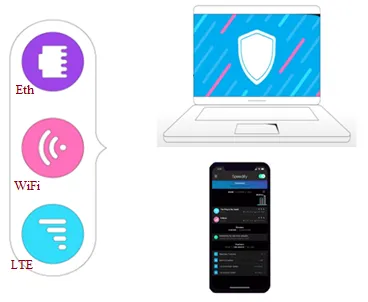
Example #3: You could bond Wi-Fi, Cellular (LTE), and Ethernet connections together to achieve a higher overall internet speed.
Advantages of Channel Bonding
- Uninterrupted Service (Failover): In case of a service failure with one connection, internet access is maintained through a backup connection from a different provider (assuming you have connections from multiple providers).
- Higher Internet Speed: Channel bonding can essentially double your internet speed compared to a single connection.
- Faster Browsing Experience: Users experience faster browsing speeds due to the increased bandwidth.
- Free Trial Software: Channel bonding software apps are often available for free download on a trial basis, allowing you to test the technology.
- Simple Implementation: The technology is generally straightforward to implement and deploy.
Disadvantages of Channel Bonding
- Requires Additional Internet Connections: You need to have multiple internet connections from the same or different providers, which translates to higher recurring costs.
- Security Concerns: User data from multiple internet connections is routed through the channel bonding hardware company for processing. This raises security concerns as a third party has visibility into your data.
- Subscription Costs: Channel bonding hardware and software often require a subscription, adding extra cost on top of the additional internet connections.
Summary
Channel bonding combines multiple channels to improve network bandwidth and speed. Advantages include higher throughput, while disadvantages include interference and implementation challenges.