
What is Conformal Antenna : Advantages and Disadvantages
Advertisement
A conformal antenna is designed to follow the shape or contour of the surface on which it is mounted, such as aircraft, vehicles, or wearable devices. Advantages include aerodynamic integration and reduced visibility, while disadvantages include design complexity, performance trade-offs, and manufacturing challenges.
Key Features
A conformal antenna is designed to conform to a specific shape. It’s a type of phased array antenna.
Its mechanical design makes it suitable for mounting on curved surfaces. This makes it useful in a wide range of applications, including:
- Aerospace designs
- Wearable antennas
- Mobile devices
- Spacesuits
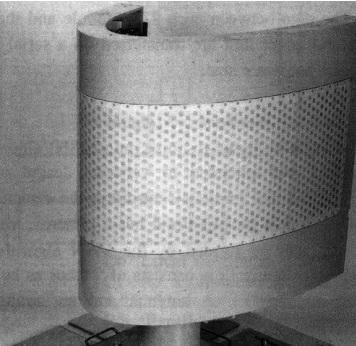
Here are some key features:
- Gain: Controllable and dependent on the shape.
- Angular coverage: Very wide, offering hemispherical coverage.
- RCS (Radar Cross Section): Lower compared to planar antenna types.
- Installation: Structurally integrated, saves space, and reduces drag.
- Radome: No conventional radome needed, eliminating bore sight error.
Advantages of Conformal Antennas
- Increased Field of View (FOV) compared to traditional antennas, offering coverage beyond the typical +/- 60 degrees.
Disadvantages of Conformal Antennas
- Complex design.
- The substrate surface changes over time during operation.
- When the antenna surface is planar, it behaves normally. However, in non-planar orientations, the radiation pattern can become distorted.
Summary
Conformal antennas blend with platform surfaces while maintaining wireless communication performance. Advantages include space efficiency and aerodynamics, while disadvantages include design and fabrication complexity.
Advertisement


