
SigFox MAC Frame Structure and Message Fields Explained
Advertisement
The SigFox MAC frame is a critical component of its communication protocol, enabling efficient and secure IoT data transmission. It defines the format and fields for uplink and downlink messages, ensuring compatibility across devices and networks. In this tutorial, we explore the MAC frame structure, highlighting the roles of key fields like frame header, payload, and CRC in facilitating reliable communication.
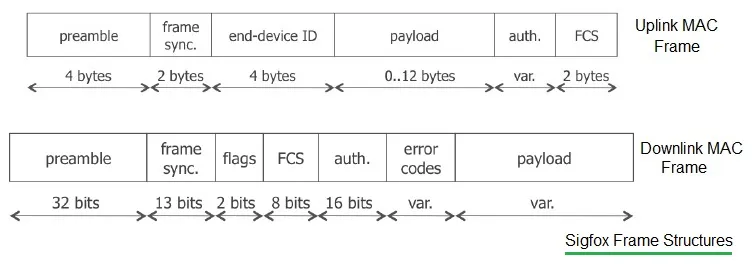
The MAC layer is part of the Sigfox protocol stack as defined in LTN protocol specifications. The table below describes Sigfox MAC frames used in the uplink and downlink directions.
Sigfox MAC Frame Types and Fields
| MAC Frame Type | Fields with size |
|---|---|
| Uplink MAC Frame (UNB implementation) | Preamble (4 bytes) Frame synchronization (2 bytes) End Point ID (4 bytes) Payload (0 to 12 bytes) Authentication (var. length) FCS (2 bytes, used as CRC) |
| Downlink MAC Frame (UNB implementation) | Preamble (32 bits or 4 bytes) Frame synchronization (13 bits) Flags (2 bits) FCS (8 bits) Authentication (16 bits) Error codes (variable) Payload (Variable) |
References: ETSI GS LTN 001, 002, 003 (Low Throughput Networks) documents.
Conclusion
A thorough understanding of the SigFox MAC frame structure and its message fields ensures better implementation of IoT applications. This knowledge is essential for developers to optimize communication and maintain network efficiency.
Continue Learning Sigfox Technology
- Sigfox Basics Tutorial
- Sigfox Network Architecture & Interfaces
- Sigfox Protocol Stack
- Sigfox Uplink & Downlink Data Call Flow
- Sigfox Advantages and Disadvantages
Explore Sigfox Use Cases
- Sigfox Asset Tracking System
- Sigfox Connected Alarm System
- Sigfox Electricity Pole Surveillance System
- Sigfox Parking Slot Tracking System
- Sigfox Smart Button Based Mail Box Alert System
- Sigfox Smoke & Fire Alert System
- Sigfox Weather Monitoring System